Employee Email Monitoring (Guide & Tool)
Key Takeaways
-

Email monitoring helps prevent data leaks, phishing, and insider threats before they happen.
-
It boosts productivity by improving response times and optimizing workload distribution.
-
Clear policies, consent, and transparency are essential for legal and ethical monitoring.
-
The right tools simplify compliance, cut costs, and strengthen overall security.
Did you know that most data breaches happen due to human errors? Yes, that’s true. But what’s more fascinating is that companies are not evolving faster to tackle it.
A simple measure for monitoring can easily stop data leaks and security threats. Especially if you’re concerned about company emails.
You won’t need employee email monitoring every day. But when you do, you’ll be glad that you had some data security in place! It can save your reputation as an employer and your legacy. That’s why proactiveness trumps reactive decisions.
So, today we’ll focus on a major employee monitoring practice, i.e, email monitoring, in detail. Let’s explore its definition, process, policies, and other aspects together!
What is Employee Email Monitoring?
Employee email monitoring is the practice of tracking emails in general. An employer installs a system to check and track emails on company devices. This often involves real-time employee monitoring and activity tracking.
It is a crucial part of boosting email security. It helps stop bad things from happening inside and outside the business.
Why Do Companies Monitor Emails?
Companies check emails because employees handle lots of secret data. Monitoring stops this data from leaking. When the majority of cyberattacks happen through email, monitoring them makes much more sense.
But that’s not all. There are many other reasons, too!
Here are the reasons why companies are heavily relying on monitoring emails:
1. Protecting Data from Phishing Schemes
Did you know that 91% of cyber attacks start with a misleading email? Yes, the number is sky-high. And that’s why most employers want to add a protective layer. By using email monitoring, employers can check and prevent employees from those pesky phishing attacks.
That’s not all, you can even secure the email attachments with that. Otherwise, it does not take much to add malware and steal crucial credentials. So, monitoring can add an extra layer of email security for your company.
2. Boosting Employee Productivity
Seems pretty odd, no? Like, employees usually feel anxious and stressed with monitoring. How can email monitoring possibly boost productivity?
For the customer service, healthcare, and similar industries, emails are one of the key communication channels. So, with monitoring, you can easily increase the response time significantly.
With monitoring, an email management tool achieved a 50% reduction in response time. In the dashboard, all the employee performance data will be available for you to assess.
3. Reducing Costs
A study found that companies spend $1800/employee/year on just unwanted emails. That’s a lot of waste for basically nothing.
Email monitoring can reveal those key insights about why that’s happening. And then, you can reduce the cost to almost zero!
4. Maintaining Regulations & Compliance
Healthcare requires strict data protection and compliance to store patient data. So, in those situations, email monitoring actually helps more than you think.
For HIPAA, you need strong audits and data security protocols. That’s why having email monitoring helps you comply with the regulations. And you can manage your data without any issues.
How Does Email Monitoring Work?
It’s like any other monitoring process. First, you need to make sure that your email system (Google Workspace or Microsoft 365) is compatible with the monitoring tool.
It’s best to have a monitoring tool that’s compatible with multiple OS and browsers. Otherwise, you might have issues with some devices that use different operating systems.
After that, checking the other requirements is essential. For example, does the tool need separate licensing? Or, is it a small tool in a larger monitoring package? Depending on that, you can decide which works best for you.
You should also check whether the tool captures all the data you want. For example, you might have to track the emails of the customer support team more thoroughly. Why? Because they deal with customers directly. And learning about their email activity can give me crucial insights into response times.
When everything’s done, you just have to set it up, and the tool should be ready to go.
Is Monitoring Employee Email Legal?
Monitoring for most businesses lies in a grey area. If it’s on company-owned devices, email monitoring is acceptable and permissible. However, there are multiple monitoring laws that employers need to maintain:
- The Electronic Communications Privacy Act (ECPA): Privacy protection from wire, oral, and electronic communications. However, if employee consent is given, employers can monitor each medium.
- The Stored Communications Act (SCA): Limitation on email data. With this, employers can only access company emails, not private ones.
- General Data Protection Regulation (GDPR): A complete guideline on how data works in the EU. This rule applies to any company from the European Economic Area.
- Health Insurance Portability and Accountability Act: An essential rule in the healthcare industry. However, it does not directly state any rule about employee emails.
Other than the actual frameworks, some key points to remember:
- Legitimateness: You must have a legitimate reason for monitoring emails. Because without that, you can’t start monitoring everyone from thin air.
- Relevance: Are the emails you want to track really relevant? Even with an Insider threat detection scenario, you need to clarify which data you’re tracking. And the duration of storing that data.
- Transparency: Employee communication is key to avoiding any issues while monitoring. Always ensure that they are aware of the surveillance. Establish a policy and inform all employees of it. Security and compliance should always come with transparency.
5 Benefits of Monitoring Employee Emails (And Some Drawbacks)
The potential of email monitoring is huge. It can be the next best tool for your team’s productivity and accountability. For small teams, it can be a serious productivity booster.
For large teams, it can mean maintaining compliance and reducing response time. So, let’s check out how you can also benefit from email monitoring:
- Proper Workload Distribution: Writing great emails is not everyone’s cup of tea. If you have email monitoring, you can find out who’s actually excelling. And who’s suffering miserably. Then you can assign tasks according to their strengths. It’s a clear employee morale & engagement booster.
- Excellent Data Leak Prevention: Monitoring employee email can help prevent data leaks to unknown third parties. Email spoofing, phishing links, and other email fraud can also be prevented.
- Proper Email Channel Usage: Monitoring employee emails ensures email communication is limited to office work.
- Response Time Reduction: Better tracking enables faster response time. Adherence to core business policies entails following a standard, always.
- Higher Customer Satisfaction: Faster response time = happy customers. 58% of customers look away if the response is not quick. So, monitoring helps you to get your customers giddy! [Source: Microsoft]
Here’s the potential disadvantages, laid out flat, as it should be:
- Employee Privacy Violation: Monitoring employees' communications can feel like a breach of privacy boundaries. Proper policy and communication can solve that.
- Diminished Employee Morale: Even with proper communication, employees may not prefer monitoring. For them, job satisfaction can notably decrease.
- Legal Consequences: If proper regulatory compliance is not followed, a lawsuit can follow.
However, all the drawbacks are not really significant if you’re following a standard policy. So, let’s imagine how that’ll work.
Employee Email Monitoring Policy
A policy should have the purpose of standardizing a process. Not to bind everyone to unethical and unnecessary regulations. So, your email monitoring policy should be simple yet definitive.
A standard email Monitoring policy should include the following:
- Purpose: Why is monitoring necessary, and who will be under surveillance?
- Scope: Clearly define which channels will be monitored.
- Data Logs: What type of data will be stored? For how long? These questions need a proper explanation in the policy framework.
- Employee Consent: This one is very crucial. Most legal frameworks require consent, either through an employee contract or a separate document. So, make sure to communicate and take consent properly. Here’s a downloadable sample of a consent form.
- Confidentiality: The policy should have strict confidentiality clauses. If any employee misuses the data or sells it to a third party, it should be considered an offense.
Best Practices for Employee Email Monitoring
Policies are sort of textbooks, which people don’t read. That’s why policies need a proper guideline for execution. So, here are the best practices while implementing email monitoring:
✅Limit Access: The access should be role-based. Not everyone should access the monitoring backend and change important settings.
✅Define KPI: Clearly define how you want to assess the changes with monitoring. It can be # of incident preventions or the average response time improvement.
✅Training and Development: Don’t be all talk and no show. Conduct in-person training sessions for education and awareness of the tools.
✅Integrate Analytics: You need to see the analytical report for performance reviews. Collaborate with your team to see which analytics can help them improve.
✅Audit Regularly: Threats, potential risks - audit everything periodically. Otherwise, what’s the point of monitoring?
✅Review & Repeat: Maintain a routine review of your company's email monitoring policy. Adjust any loopholes or improvement areas for stability.
What you should not do:
❌Collect unnecessary personal data
❌Ignore signs of potential risks
❌Choose a tool that’s too complicated
Apploye – A Great Tool for Computer Monitoring
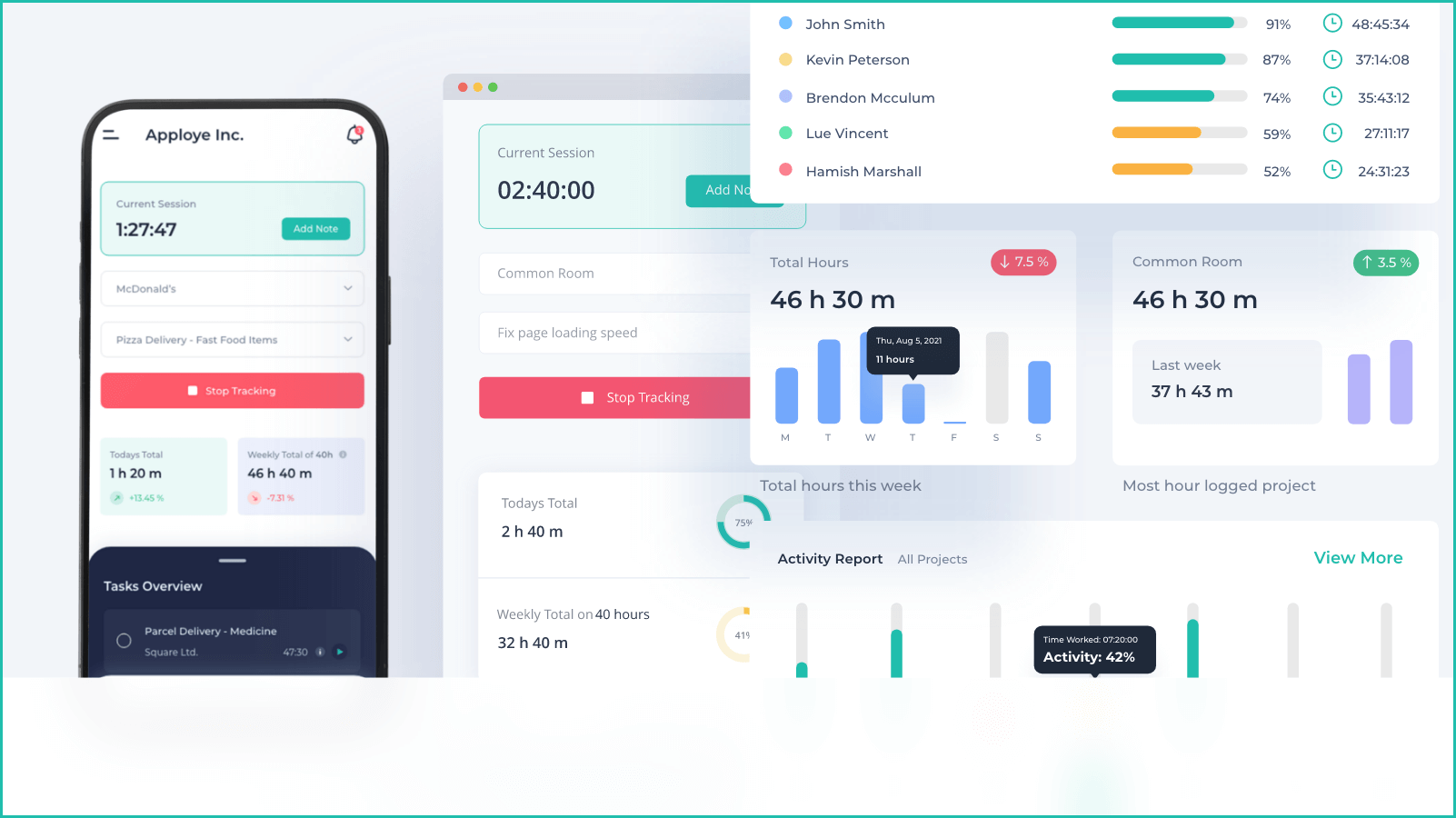
Apploye is a trusted choice for monitoring both office and remote teams. It offers powerful features and competitive pricing. That makes it a standout solution for teams of any size.
With Apploye, companies can track work activity easily. The tool records time, captures screenshots, and monitors application usage and internet activity. The dashboard is clean and simple. It monitors employee productivity, manage tasks, and organize projects with less effort.
Apploye also supports every type of workforce. You can be a freelancer, a manager, or an employer of a hybrid team. Your team may work onsite, remotely, or without a desk. Apploye adapts to all situations.
It includes advanced capabilities like a real-time live feed. It also offers instant screenshots. Along with that, you get all the essential features you expect from a top-tier time-tracking and monitoring tool.
How Apploye Helps Managers Monitor Employee Email?
Here are the features that Apploye provides for email monitoring:
- Random Screenshots: Apploye captures random screenshots every 10 minutes (up to 3 per interval).
- Advanced Screenshot Control: You can fully customize screenshot rules, block deletions, disable screenshots for anyone or everyone, and adjust permissions as needed.
- Apps Usage Tracking: Apploye tracks how long employees use specific apps, helping managers make better decisions about resource allocation.
- URL Tracking: Apploye monitors visited URLs and time spent to prevent overuse, detect unusual browsing, and ensure compliant usage.
- Live Feed: The Live Feed shows real-time online status, current activities, recent start times, and now includes instant screenshots.
7 Other Tools You May Consider for Monitoring Employee Email
The following is a list of some of the most popular employee email monitoring tools available today.
Teramind: Best for Detailed Monitoring and Security
Teramind is a user behavior analytics program with a strong email monitoring tool. Businesses choose it for insider threat management, workplace productivity, and more.
The most notable features of Teramind are:
- Intuitive business intelligence dashboard
- Live and recorded screen captures
- Remote desktop control
- File transfer tracking
- Instant message monitoring
- Printed document tracking
- Online meeting monitoring
Starting price: $13.99 per user/month.
InterGuard: Ideal for Compliance and Email Oversight
This one happens to capture every detail of employee email activity. Even when they are all deleted! It also flags unusual behavior through anomaly detection. That’s why it’s a reliable tool for both compliance and security.
Key features of this great tool include:
- Works with all major email platforms
- Captures full email content and attachments
- Custom monitoring rules by user or department
- Alerts for abnormal email activity
- Keyword-based alerts with optional screenshots
- Fast, advanced search filters
- Custom and scheduled reporting
- Dashboard with visual email activity trends
Starting price: $25 per user/month.
EmailAnalytics: Great for Productivity Tracking
EmailAnalytics gives clear visibility into Gmail and Outlook activity without disrupting workflows. It tracks email volume, response behavior, and team performance in real time, making it ideal for productivity monitoring and workload management.
There’s more to this unique software:
- Tracks emails sent, received, and overall volume
- Measures average response time and SLA performance
- Identifies top senders, recipients, and activity patterns
- Provides AI-powered sentiment analysis
- Sends daily or weekly performance digests
- Works through Gmail/Outlook API with no installation
- Privacy-focused: reads metadata only, with full encryption
Starting price: $17.1 per inbox/month.
Hubstaff: Good for Time-focused Email Insights
If you want to know the exact timestamps of email activity, Hubstaff is for you. With this, you can see how much time employees spend on business vs. personal email. It pairs email insights with its broader productivity-monitoring tools.
Other notable features of this tool include:
- Tracks email activity in real time
- Shows time spent on business vs. personal email
- Integrates with screenshots, app/URL usage, and time tracking
- Flags unusual behavior through productivity insights
- Only monitors during active work time for ethical use
Starting price: $7.5 per user/month.
ActivTrak: Best for Ethical Monitoring and Analytics
ActivTrak is a provider of workforce analytics software that is hosted in the cloud. It is dedicated to delivering solutions that improve visibility and productivity by employing an ethical strategy that places a primary emphasis on the management of productivity and transparency.
The most noteworthy features of ActivTrak are:
- Dashboard and team summaries
- Benchmark and goals
- Screenshots and real-time user activity
- Data privacy control
- Location insights
- Activity classifications
Starting price: Free or $10 per user/month.
StaffCop: Perfect for Insider Threat Detection
StaffCop helps you with Activity Monitoring, Productivity Optimization, and User Behavior Analytics. It focuses on detecting and responding to insider threats through a combination of advanced behavioral investigations, offering a superior, fully integrated solution.
The most remarkable features of StaffCop are:
- Automatic alerts for emails
- Customizable alerts based on email properties
- Printed document monitoring
- Smart rules and alerts
- Instant message monitoring
- Session Recording & Metadata
Starting price: No clear mention.
Insightful.io: Best for Lightweight Productivity Monitoring
Insightful.io is often regarded as the most effective solution for monitoring staff members. However, it lacks a punch in the email monitoring part compared to other solutions in our list.
The most significant features of Insightful.io are:
- Apps and Websites Usage
- Automatic Time Tracking Customized for a Specific Industry
- Productivity Tracking
- Automatic Time mapping
- Apps and Websites Usage
Starting price: $6.40 per user/month.
Conclusion
Though in many arenas and regions, employee email monitoring might be controversial and detrimental to employee trust, professionals show no leniency towards data theft, perfidious actions, and time-wasting habits.
So, to keep up with your business counterparts, it is high time to adopt a system that protects you against any abuse of your confidential business data. Use Apploye and build defiance against every mishappening you predict to happen.
Frequently Asked Questions
Is it legal for employers to monitor employee emails?
Yes, if employers have legitimate reasons, then it’s permissible to monitor employee emails. In most cases, it’s legal to track or monitor employees to maintain secret data.
Can I monitor my employees' emails?
Yes, you can monitor your employees’ emails. However, some legal considerations can stand in your way. It’s best to review the state laws or consult a legal professional before monitoring.
Can my boss read my emails without my knowledge?
Yes, if your employer tracks your email, then he/she can read emails without your knowledge. Most likely, you have provided an email monitoring constant. Otherwise, contact a legal expert to protect your privacy.
How to monitor Outlook emails?
Use monitoring tools that connect through the Outlook or Microsoft 365 API to track email activity and response behavior. Admins can also use mail flow rules or audit logs inside Microsoft 365. These methods give clear visibility without disrupting the user.
How can I tell if my employer is monitoring my emails?
Your employer may monitor emails if they use monitoring software or have admin access to the email server. Company IT policies often state this clearly. Some signs include security notices, audit logs, or limited email settings.