


Your Result
Decimal Hours
7 hours 45 minutes = 7.75 decimal hours
Calculation:
7 + (45 ÷ 60) = 7.75
Key Features


Use Cases


Explore
Tired of Calculating Employee Hours Manually?
Track work hours automatically, keep timesheets organized, calculate payments, and generate reports for payroll and billing.
Start Tracking Time for Free
A decimal hour calculator converts time written in hours and minutes into a decimal number.
Decimal hours are useful because they make time easier to use in payroll, timesheets, spreadsheets, invoices, project costing, and other calculations.
Instead of calculating pay from “7 hours and 45 minutes,” you can use 7.75 hours directly.
The important thing to remember is that minutes are based on 60 minutes per hour, not 100. That means 45 minutes is 0.75 of an hour, not 0.45.
Use this formula:
Decimal Hours = Hours + (Minutes ÷ 60)
First, keep the whole number of hours.
Then divide the minutes by 60 and add the result to the hours.
Start with:
7 hours 45 minutes
Divide the minutes by 60:
45 ÷ 60 = 0.75
Add that to the 7 whole hours:
7 + 0.75 = 7.75
So:
7 hours 45 minutes = 7.75 decimal hours
Use this decimal hours chart when you need a quick conversion without doing the calculation manually.
Values are rounded to two decimal places.
You can also convert decimal hours back into regular hours and minutes.
Use this formula for the minute portion:
Minutes = Decimal Portion × 60
The whole number is:
6 hours
Take the decimal portion:
0.75
Multiply it by 60:
0.75 × 60 = 45
So:
6.75 decimal hours = 6 hours 45 minutes
If the decimal number has already been rounded, converting it back to minutes may produce an approximate result rather than the exact original time.
Clock time and decimal time describe the same duration in different formats.
The number after the decimal point is a fraction of an hour, not the number of minutes.
For example:
8:45 ≠ 8.45 decimal hours
The correct conversion is:
8:45 = 8.75 decimal hours
That's because:
45 ÷ 60 = 0.75
Decimal hours make it easier to perform calculations with time.
Suppose an employee works 7 hours 45 minutes at an hourly rate of $20.
First, convert the time:
7 hours 45 minutes = 7.75 hours
Then calculate the amount:
7.75 × $20 = $155
The same method can be used when calculating employee pay, contractor payments, project costs, or client invoices.
Decimal hours can be especially useful for:
Writing 8.45 for 8 hours 45 minutes is incorrect.
8.45 hours actually means:
8 hours + (0.45 × 60 minutes)
which equals:
8 hours 27 minutes
The correct decimal value for 8 hours 45 minutes is:
8.75 hours
There are 60 minutes in an hour, so minutes must be divided by 60, not 100.
For example:
30 ÷ 60 = 0.50
Therefore:
6 hours 30 minutes = 6.50 hours
Some minute values produce repeating decimals.
For example:
20 ÷ 60 = 0.333333...
For calculations involving pay or billing, calculate using as much precision as your system requires and round only when appropriate.
Converting minutes into decimal hours and rounding an employee's clock-in or clock-out time are two different things.
This calculator converts one time format into another. It does not decide which working time should be counted, apply an employer's time-rounding policy, or determine compensable hours.
If you use decimal hours for payroll, follow the applicable wage-and-hour rules and your organization's timekeeping policy.
A decimal hour calculator is convenient when you have a few entries to convert.
But if you're managing employees, contractors, projects, or multiple clients, repeatedly converting hours by hand creates unnecessary work.
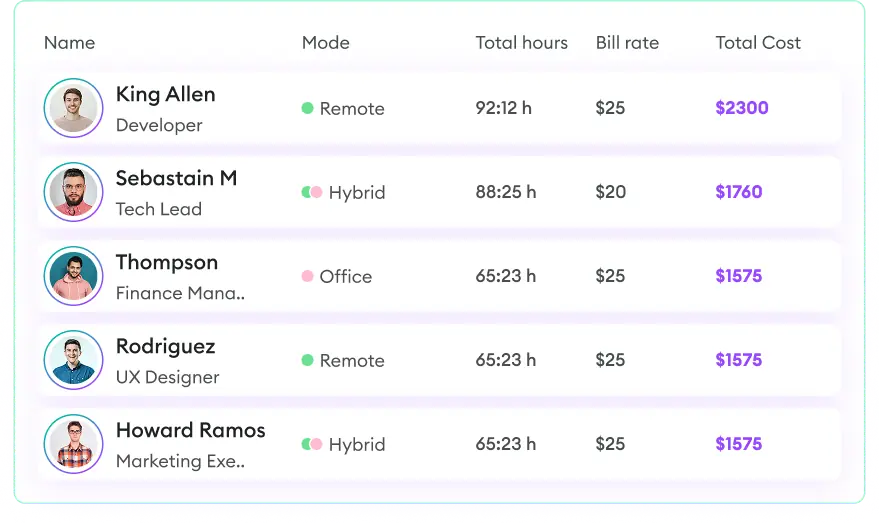
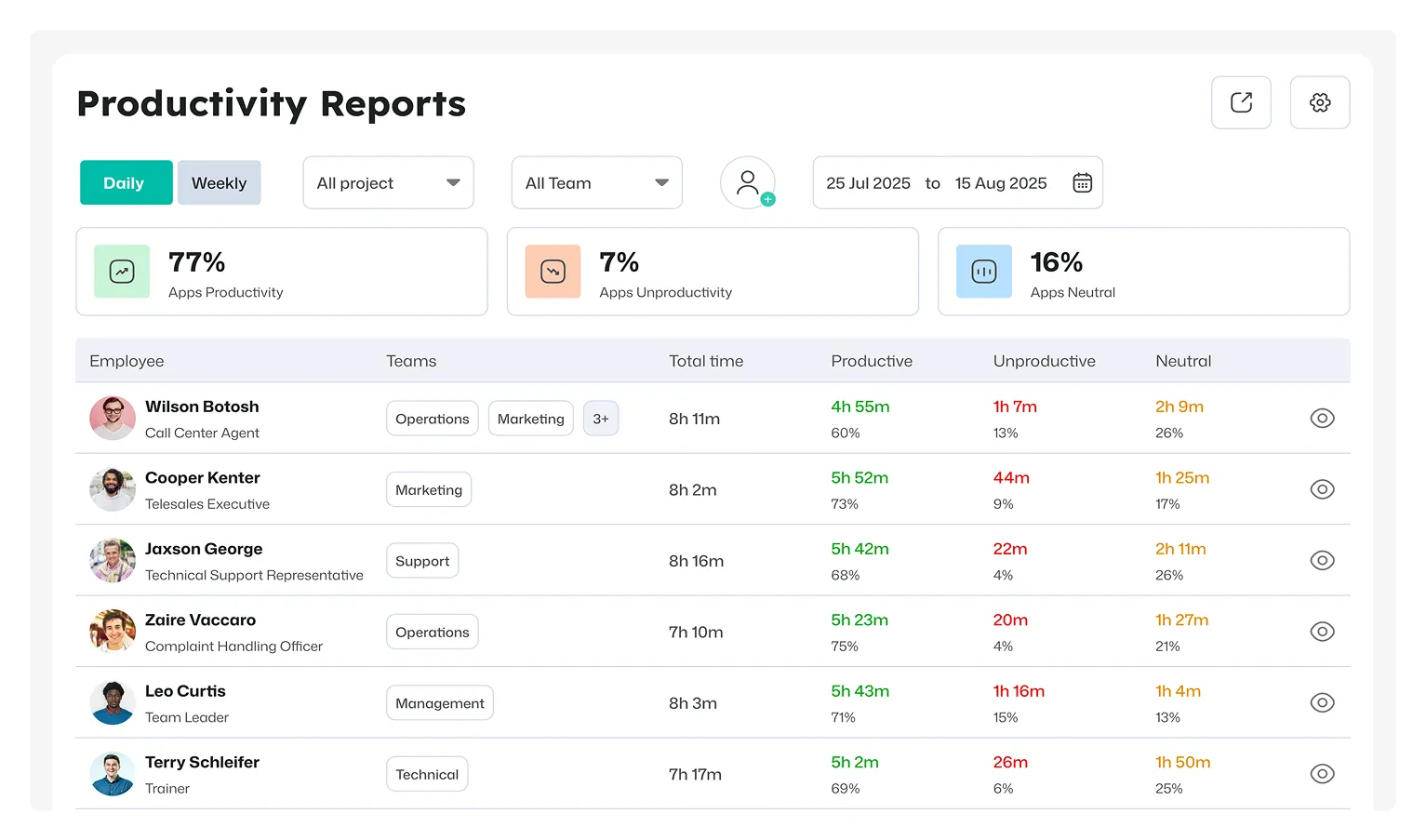
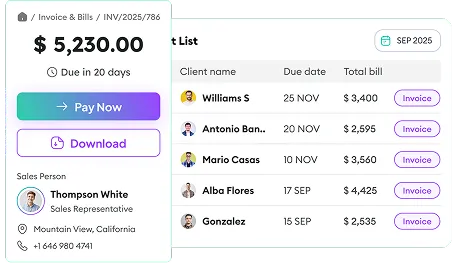
Apploye helps you automate the process.
With Apploye, you can:
Instead of collecting timesheets and converting work hours at the end of every pay period, keep the time records organized from the moment work starts.
Spend Less Time Calculating, More Time Managing
Use Apploye and keep your team's time, timesheets, projects, payroll, and billing in one place.
Start Tracking for Free Decimal hours express time as a base-10 number instead of hours and minutes. For example, 7 hours 30 minutes is written as 7.50 decimal hours, while 7 hours 45 minutes is 7.75 decimal hours.
Divide the number of minutes by 60.Decimal hours = minutes ÷ 60For example:45 ÷ 60 = 0.75 hours
Keep the whole hours and divide the minutes by 60. Then add the two values together.For example:6 hours 20 minutes= 6 + (20 ÷ 60)= 6.33 hours when rounded to two decimal places.
No. 7 hours 30 minutes equals 7.50 decimal hours.Writing 7.30 decimal hours represents 7 hours and 18 minutes because:0.30 × 60 = 18 minutes.
No. 8 hours 45 minutes equals 8.75 decimal hours. 45 minutes is three-quarters of an hour: 45 ÷ 60 = 0.75.
Multiply the decimal portion by 60. For example: 5.75 hoursTake the decimal portion: 0.75 × 60 = 45So:5.75 hours = 5 hours 45 minutes
Decimal hours allow work time to be multiplied directly by an hourly rate. They are also convenient for timesheets, payroll reports, spreadsheets, project costing, and client billing.
Two decimal places are commonly convenient for displaying decimal hours, but the precision you should use depends on your payroll, billing, or timekeeping system. Avoid rounding earlier than necessary when money is being calculated.
Yes, you can use it to convert hours and minutes into decimal hours for a payroll calculation. The calculator only performs the time conversion; payroll rules such as overtime, breaks, compensable time, taxes, and legally permitted rounding must be handled separately.
Yes. Decimal hours are useful when preparing timesheets, calculating billable work, creating invoices, determining project costs, or multiplying working time by an hourly rate.
Yes. The decimal hour calculator is free to use and does not require an account to perform a calculation.
Stop Converting Work Hours by Hand
Get work hours tracking, time & project reports, timesheet approval, payroll management, project budget tracking, mobile time tracking, activity tracking
No credit card required.