Ways of Working: The Modern Guide for Teams, Managers, and Organizations
Key Takeaways
-

Clear Ways of Working (WOW) align teams, boost collaboration, and drive consistent performance.
-
Establishing shared expectations and mutual accountability creates a culture of trust and efficiency.
-
A strong WOW framework bridges company culture, digital transformation, and personal excellence for long-term success.
-
Effective ways of working transform group understandings into measurable, value-driven outcomes.
In a world full of hybrid schedules and remote workers, the way of working defines whether your team thrives or drifts. It acts similarly to a north star that guides you when you need it.
From Scrum Masters guiding agile squads to leaders designing enterprise scaling frameworks, every company needs shared expectations. And a way of working (WoW) lets you achieve exactly that.
By the time you’re done with this article, you will know what it means, why it matters, and how to establish, measure, and sustain it!
What Does Ways of Working Actually Mean?
A Way of Working (WoW) is a shared system of norms, agreements, and processes that describe how a team collaborates to achieve desired results.
This system usually includes communication flow, roles and responsibilities, basic behavioural protocols, and team mindset. When done and implemented properly, it becomes a team’s backbone on how they align with the company’s goals and culture.
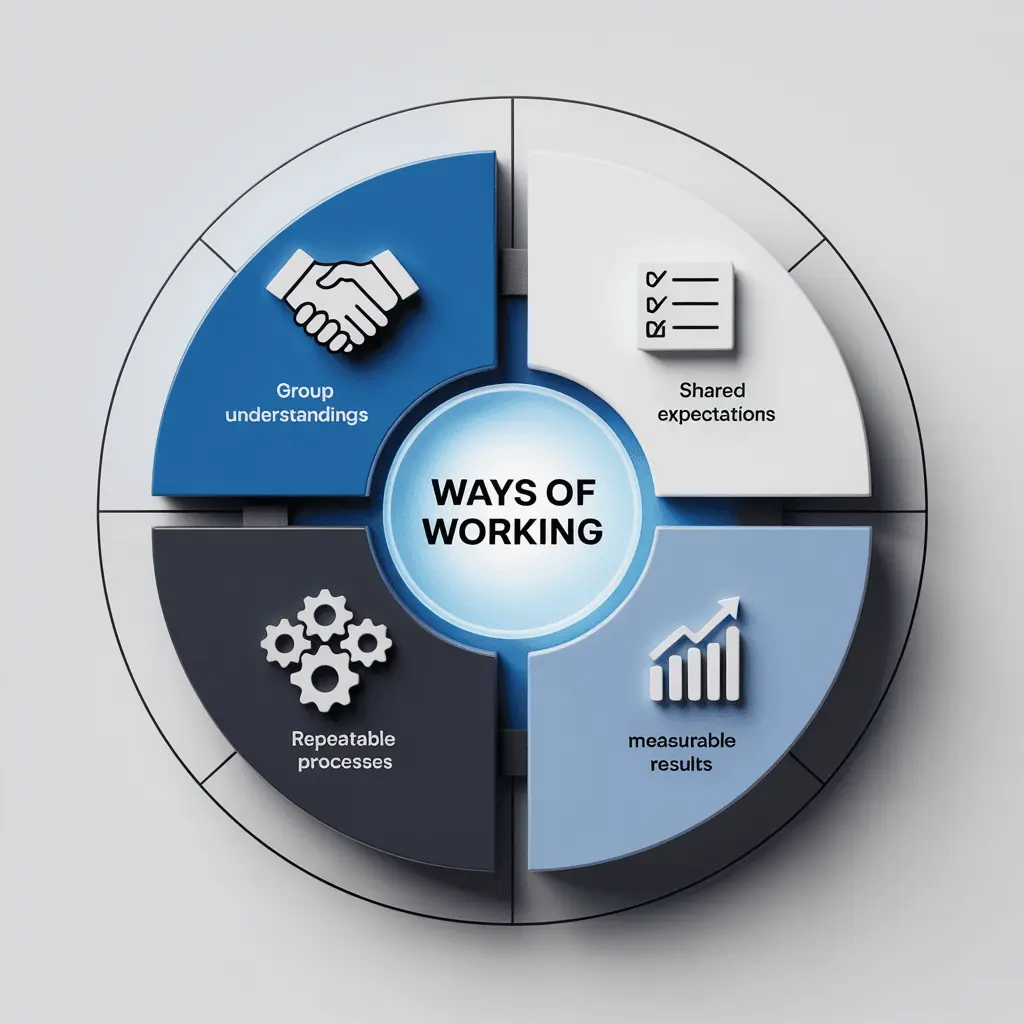
So, basically:
Ways of Working = Group understandings + Shared expectations + Repeatable processes + Measurable results.
If you haven’t been living under a rock, you might have already seen organizations adopting WoWs. It creates the perfect balance between organizational processes, reporting lines, and actual team behavior.
It’s a complete set of processes that breaks down the company culture into daily actionable targets.
See your team's productivity patterns live
Why Should You Run a Ways of Working Discussion?
Look, every policy has its goods and bads. So does every team. That’s the sole reason why a way of working can be a strategic timeout; a pause to rethink how it collaborates, communicates, and creates value.
A dedicated way of working discussion acts as that reset button. It helps teams:
- Clarify roles and responsibilities within project teams.
- Set ground rules for meetings, decisions, and conflicts.
- Create transparency in the span of control and reporting lines.
- Build mutual accountability — ensuring every member supports the collective goal.
- Define supporting indicators and development indicators to measure team progress.
Without these discussions, it’s very common for large corporations to succumb to the daily tasks. While it can be harmless on the outside, a company can hardly improve if it stops innovation.
Organizations that revisit their ways of working show improved engagement, fewer bottlenecks, and a stronger bond towards the same goal. Neuroscience at work also shows that clearly defined norms reduce stress, enhance focus, and support better decision-making patterns in cross-functional environments.
Turn team insights into better decisions
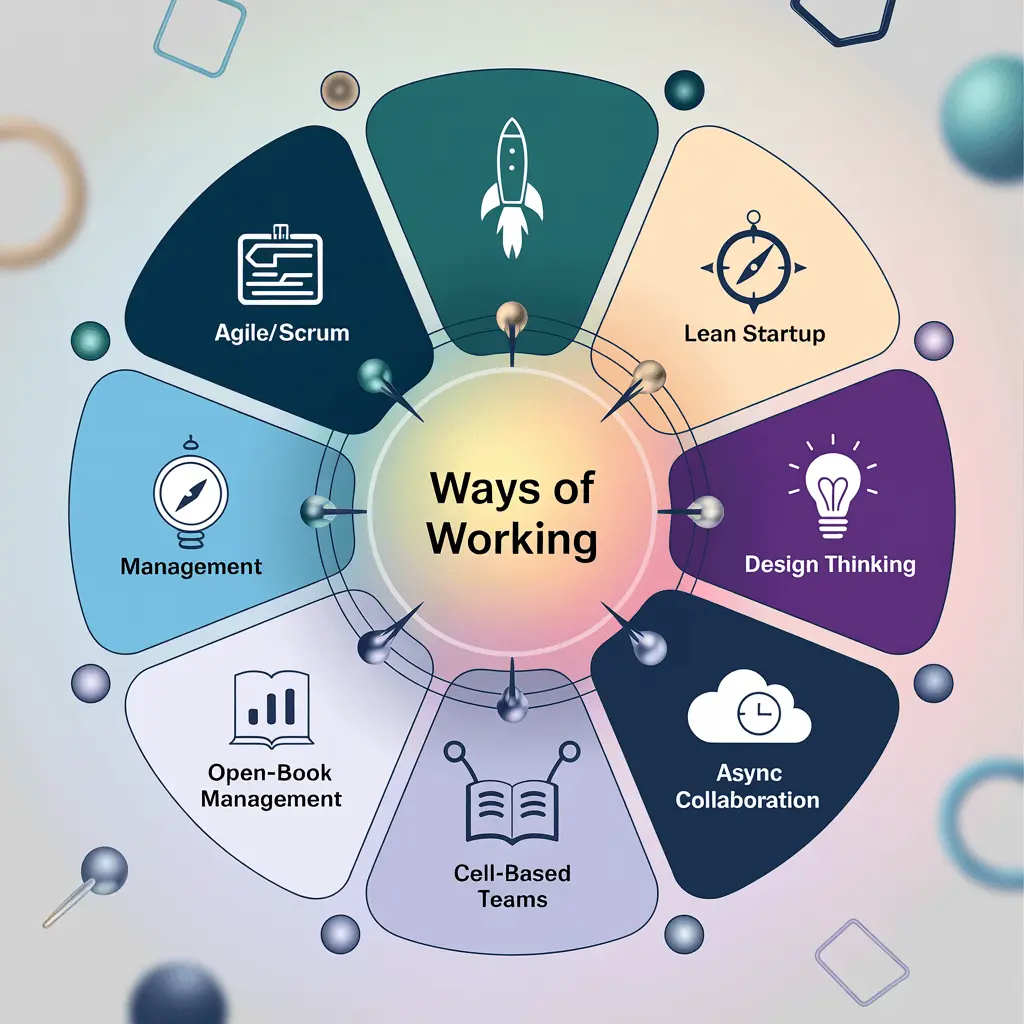
7 Common Ways of Working (and When to Use Them)
Different teams, industries, and organizational structures demand different approaches. That’s why I have summarized 7 common ways of working and how they will translate into your workflow:
1. Agile / Scrum (Team-driven Iteration)
Usually, the scrum master or product owner digs this WoW more than anyone. Fueled with kanban boards, daily standups, and transparency, this system focuses on feedback loops for continuous revisions.
Furthermore, adaptive planning and short delivery cycles are some key features of this way of working. No wonder many teams prefer this Scrum framework nowadays.
2. Lean Startup (Outcome-Driven)
No hierarchy, no corporate politics, no nonsense. The Lean startup model focuses solely on outcomes, nothing else. Continuous learning, rapid prototyping, and a value stream mindset are what drive the people of this Wow.
Everything this system entails results in low wastage and drives innovation.
When to use: Early-stage product development, MVP cycles, or digital transformation projects.
3. Self-Management (Decentralized Authority)
As the name suggests, you are your leader here. Well, you definitely will have a boss or team leader, but the team decides its own decision-making model and KPIs. Then, the WoW is discussed, and the accountability structure is decided.
This type of WoW encourages autonomy but requires a strong behavioural framework and psychological safety.
4. Design Thinking (Human-Centered Innovation)
This WoW is completely human-centered, and it integrates the concept of empathy and experimentation to solve problems. While logic and rationality are needed, this approach moves away from the traditional, outdated theory to modern creative thinking.
Small organizations can heavily benefit from this approach by embracing the intricacies of customer problems and finding unique solutions.
5. Open-Book Management
If you have ever seen a company that is completely transparent with its revenue, then that company might be following open-book management.
This fascinating WoW lies on the foundation of ultimate financial transparency throughout the company. Basically, every penny of revenue is tied with what’s the actual cost of the employee and staff.
So, the company will thrive when the employees are driven by personal excellence. Furthermore, this approach enables the employees to make better financial decisions, which will eventually benefit the company as well.
6. Cell-Based or Standing Teams
Let me warn you first that cell-based or BSO's cell philosophy is not for small teams. This will only work when you have an enterprise with multiple talented teams across departments.
When you define each department as a cell and decentralise, each cell performs with a flatter hierarchy and efficient workflow.
If you have teams with a high level of skills, then don’t think too much and choose this WoW!
7. Async-First Collaboration
Finally, shoutout to all the remote teams out there. This WoW is tailored for you! With async communication, it does not matter who’s working when. Just get the job done, and it’s all fine.
However, you need to define clear communication windows and asynchronous work rules. It reduces Cloudflare error-type issues - metaphorically speaking - caused by overlapping tasks and communication overload.
Keep remote teams accountable effortlessly
How to Run a Ways of Working Workshop (Step-by-Step)
By now, you might have realized that Ways of Working is not just about how the work is done. Rather, it's about aligning both new and established teams toward a shared goal with expectations kept in check.
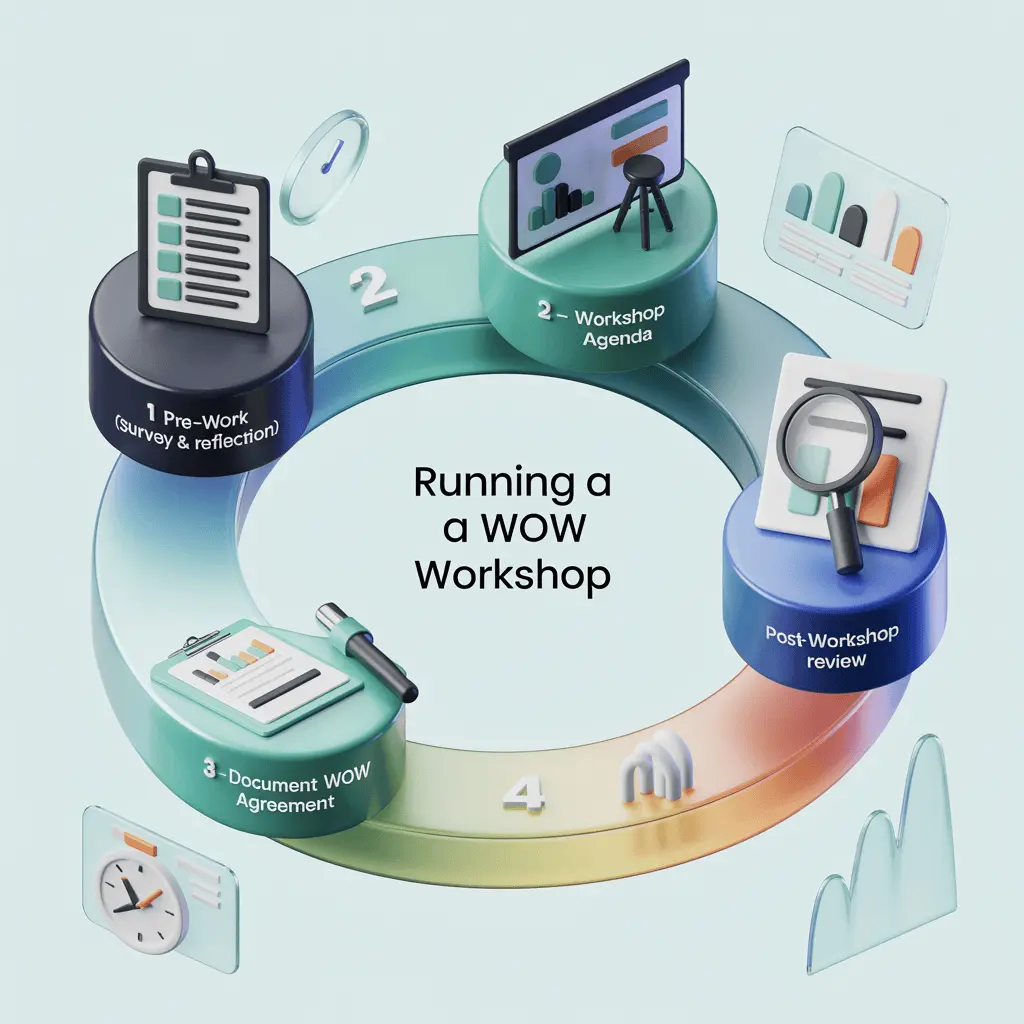
Here’s how you can effectively run a workshop on ways of working.
1. Pre-Work (Survey & Reflection)
Before the session, send out a short survey to understand current friction points.
Before the session even starts, you need to do some homework. A short survey or questionnaire needs to be prepared to share with everyone. Why’s that needed?
It will help everyone on our team to reflect on their working habits and provide solid input during the session.
Some common questions for the survey:
- What’s working well in our current setup?
- What’s holding us back from desired results?
- Which meetings feel most valuable?
- What changes would make collaboration smoother?
- How clear are our current roles and responsibilities?
- What does mutual accountability mean to you?
2. Workshop Agenda
It’s showtime! If you are still not prepared, always start with icebreaking and addressing the agenda in the opening minutes.
Keep in mind that if your team is not familiar with sharing everything in front of everyone, then at first, the meeting can feel daunting. Even some employees might feel a little tension among themselves.
If you can just be respectful and show gratitude to everyone, then the job becomes much easier.
Use digital whiteboards or collaborative kanban boards to visualize the discussion in real time.
3. Document the WOW Agreement
After the meeting, make sure to document the outcomes and action points as a WOW agreement, similar to working agreements. It should include all the commitments shared by everyone and how to proceed further. For example:
- Team norms and working hours.
- Communication guidelines.
- Decision-making model and escalation paths.
- Review cadence for checking progress.
- Supporting and developing indicators tied to goals.
- Mutual accountability checkpoints.
Apploye’s employee monitoring data can help validate these norms - offering a quantifiable lens to ensure the team’s commitments align with reality.
Validate your WoW with real activity data
4. Post-Workshop: Embed and Review
You don’t think just having the discussion is enough, right? Following up with the team is the most important thing. You need to check whether you’re maintaining the commitment or not. Similarly:
- Are team norms being followed?
- Have key metrics improved?
- Do people feel greater clarity in roles?
- Has team friction decreased?
This reflection ensures the process remains iterative and adaptive. Then, set a quarterly roadmap of when to carry forward the meeting again.
How to Measure the Success of Your Way of Working?
Do you know what the best way to measure the success of your WoW discussion is? KPIs. You obviously documented some KPIs in the meeting. So, turn them into metrics that will guide your team and WoW to success:
When combined with performance reviews, these indicators give leaders a balanced view of both outcomes and behavioral alignment.
Track focus time across your entire team
Conclusion
Ways of working, as the name tells you, is just a way or process of how you should work. However, these frameworks will only work when your team is understanding, flexible, and open to change.
So, with Apploye, learn more about your team’s focus hours, productivity peaks, and then decide which WoW makes your team go wow!
Find your team's productivity peaks today
Frequently Asked Questions
How do cross-functional teams benefit from clear ways of working?
Cross-functional teams thrive when clear ground rules, roles and responsibilities, and decision-making models are established. This alignment enables mutual accountability and faster progress toward shared goals.
What is a WOW agreement, and why is it important?
A WOW agreement is a documented set of expectations, processes, and behaviors agreed upon by team members. It fosters transparency, trust, and consistent collaboration across projects or departments.
How can a Scrum Master improve a team’s way of working?
A Scrum Master facilitates meetings, encourages a team mindset, ensures adherence to frameworks like Scrum or Kanban, and helps remove blockers that affect performance or group understanding.
How do organizations integrate WOW into digital transformation?
During digital transformation, organizations redefine their WOW by adapting processes, adopting emerging technologies, and creating hybrid systems that support remote working capabilities.
What’s the link between WOW and company culture?
Company culture shapes and reflects an organization’s way of working. When WOW aligns with values like collaboration and excellence, it drives engagement and sustained performance.
How can WOW frameworks support performance reviews and personal excellence?
WOW frameworks provide measurable development indicators and supporting indicators, creating a behavioral framework that guides both performance reviews and individual growth.
What’s the difference between a standing team and a project team?
A standing team has a long-term structure with ongoing responsibilities, while a project team is temporary and focused on specific desired results or deliverables.
How can enterprises scale their ways of working effectively?
Using an enterprise scaling framework helps maintain consistency across large teams, aligning reporting lines, span of control, and shared expectations while supporting flexibility.
What is The Friction Project, and how does it relate to WOW?
The Friction Project explores organizational friction—where inefficiencies slow progress. Applying its insights helps teams perform a “factory reset” on processes to optimize collaboration and outcomes.
How do organizations decide which WOW model suits them best?
The best way of working depends on company size, culture, goals, and technological maturity. Teams often iterate using supporting indicators to find the most effective structure.
About Author