By monitoring remote employees, BrandMojo increased team efficiency from 40–45% to 75–80% while creating greater transparency with freelancers, VAs, and clients.
About BrandMojo
BrandMojo is a brand consultation and digital innovation agency working with clients across the globe.
To deliver client projects, the agency works with a distributed team that includes virtual assistants and freelancers. Founder and Chief Creative Officer Kiran N had worked with VAs for several years, giving the agency the flexibility to bring in talent across different projects and client engagements.
But as the team and its ways of working evolved, BrandMojo began running into a problem familiar to many agencies managing remote workforces: they had limited visibility into how time was being spent.
The Challenge: Managing Hourly Work Without Visibility
BrandMojo initially worked with its VAs on a project-by-project basis.
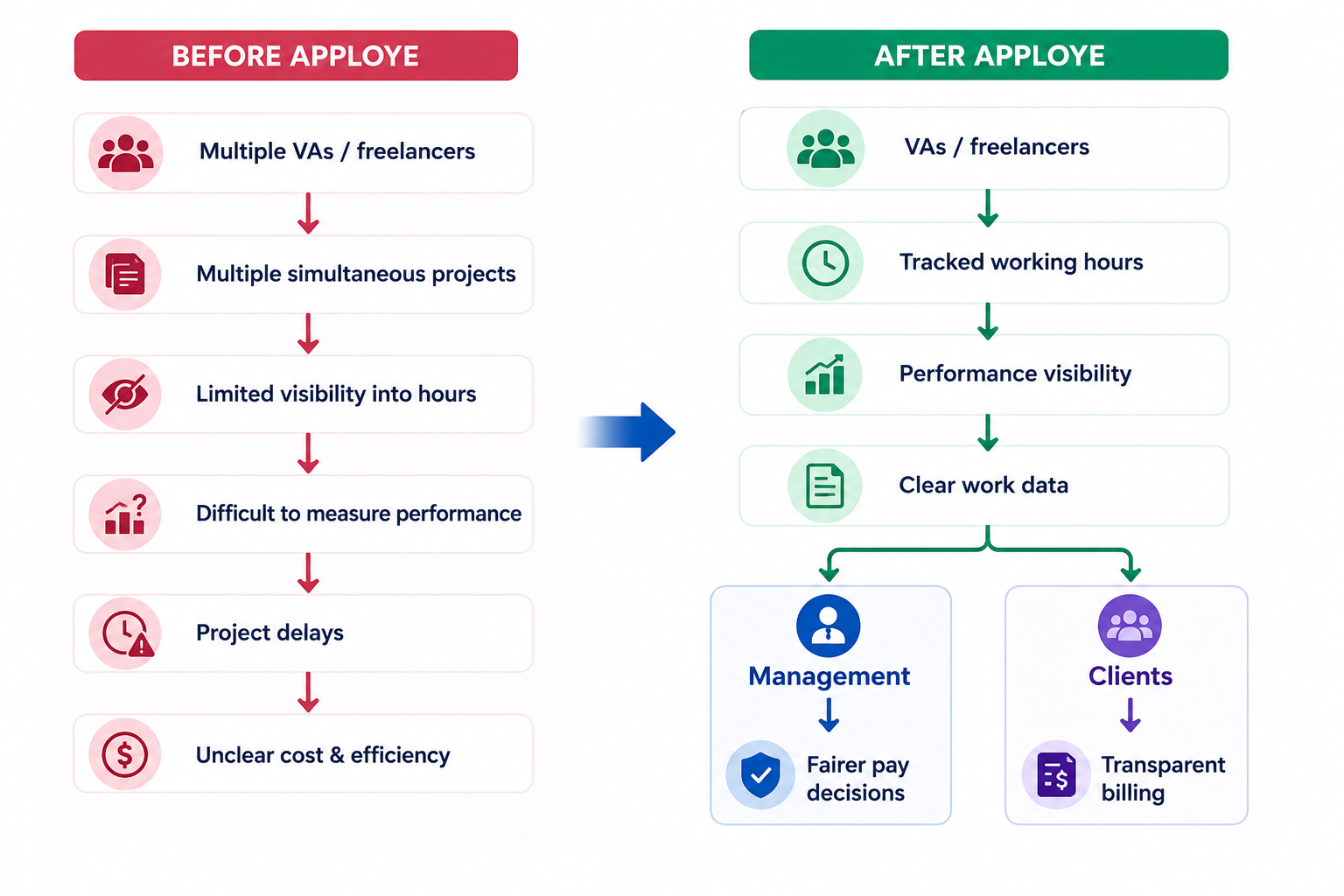
Over time, however, the team realized that some VAs were working across multiple projects simultaneously. That made it increasingly difficult to understand how much attention each project was receiving, and some projects began experiencing delays.
The agency gradually moved from project-based engagements to an hourly working model.
That solved one problem, but created another.
“One of our biggest challenges was measuring employee performance. We realized that we were really burning our hands because we had no clear way to measure the time, cost, and overall productivity of the work being done.”
— Kiran N, Founder and Chief Creative Officer, BrandMojo
For BrandMojo, the problem was no longer simply about tracking time. It was about understanding whether those hours were producing the expected results.
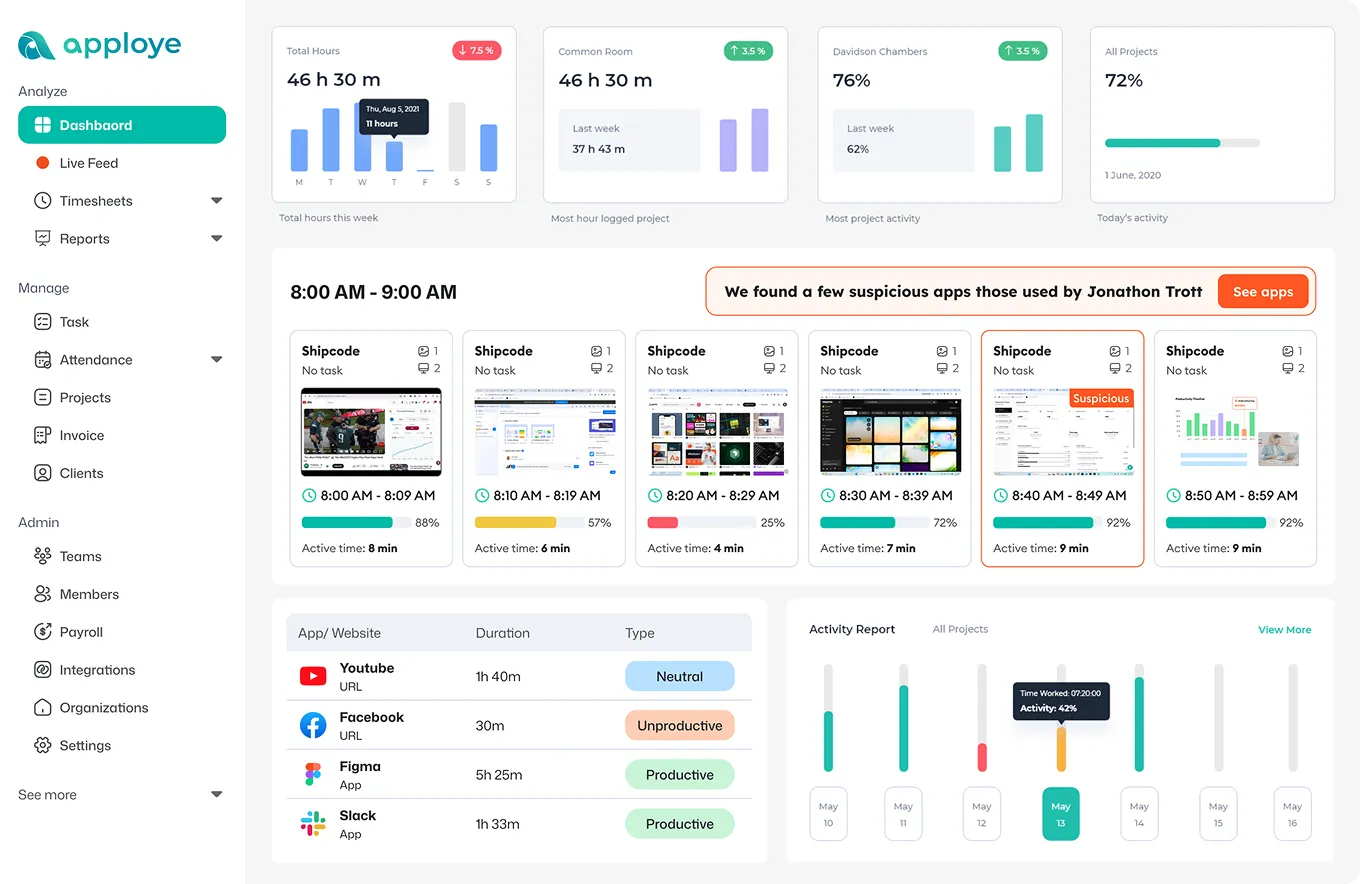
The agency implemented Apploye to create a clearer view of how its remote team was working and to begin measuring productivity more consistently.
Instead of relying primarily on assumptions, manual follow-ups, or the final delivery date of a project, BrandMojo could now use productivity data to understand how time was being used.
That visibility began changing the way the agency managed its distributed team.
The Result: Efficiency Increased from 40–45% to 75–80%
The improvement was substantial.
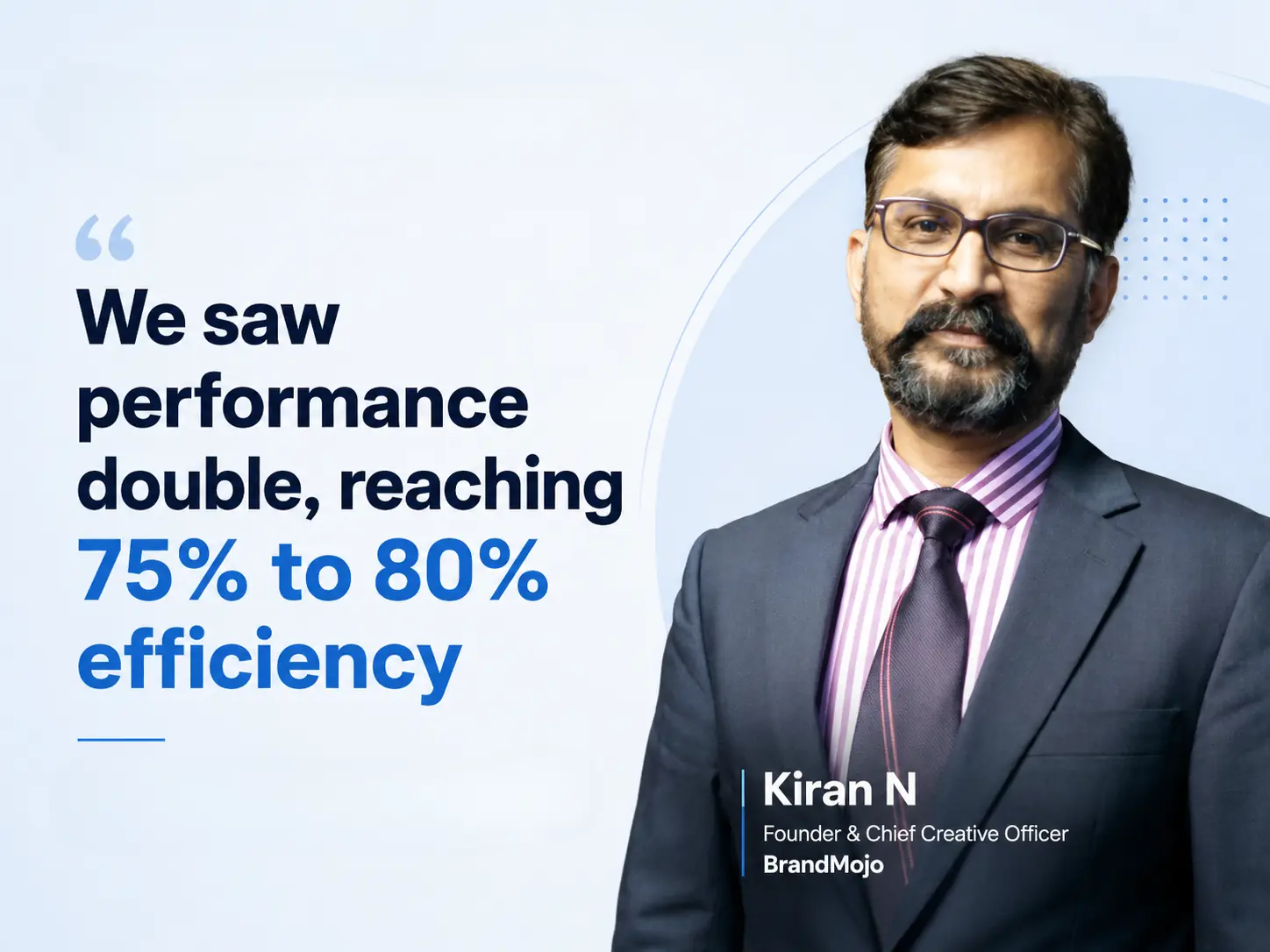
“We saw a drastic improvement in overall efficiency. On average, we used to get around 40% to 45% efficiency. After implementing the system, we saw performance almost double, reaching around 75% to 80%.”
Greater efficiency means the same team can use its time more effectively, project costs become easier to understand, and managers have better information when deciding where operational improvements are needed.
Giving Clients Greater Transparency into the Work
BrandMojo began sharing hourly work data with its clients.
That gave customers a clearer view of what the agency and its team had been working on instead of requiring them to simply trust a final number of billed hours.
“Our clients had no problem paying us because they could clearly see the work being done.”
The result was greater transparency around the relationship between time, work, and cost.
For BrandMojo, this helped strengthen its relationships on both sides of the agency model. VAs had clearer accountability for the work they performed, while clients had greater confidence in the work they were paying for.
From Manual Uncertainty to Measurable Performance
For Kiran, the value of Apploye ultimately comes down to inefficiency cost.
Before implementing the platform, BrandMojo lacked a clear way to connect the time invested in projects with the productivity and cost of delivering them.
But now, with employee monitoring software at their disposal, the agency could identify performance more clearly while reducing the uncertainty and manual effort involved in managing hourly work.
“The cost of losing your team's efficiency is far greater than the investment you make in Apploye.”
Kiran believes the financial impact has been significant.
“I don't think you can even imagine how much money we have saved with such a small investment compared with the amount of manual work we used to do.”
For BrandMojo, Apploye became more than a way to record working hours. It gave the agency one shared source of information for conversations with the three groups its business depends on: the people doing the work, the managers accountable for performance, and the clients paying for results.

 Productivity TrackingMeasure daily performance
 Workforce AnalyticsGet workforce intelligence
 Activity MonitoringCheck user behaviour
 Screenshot MonitoringMonitor screen activity
 Employee TimesheetTrack work hours
 Screen RecordingRecord work sessions
 Payroll & InvoiceOrganize projects efficiently
 Payroll & InvoiceAutomated payment processing
 ReportingGenerate insightful reports
 EnterpriseProductivity for larger organizations
 Computer MonitoringTrack computer usage
 Staff MonitoringOversee team performance
 Time RecordingCapture work hours
 Online TimesheetsDigital time logging
 Attendance TrackingMonitor employee presence
 Insightful ReportsInsightful time reports