Flexible Work Arrangements: Types, Benefits & Policy Guide for Modern Teams
Key Takeaways:
-
Flexible Work Arrangements let eligible employees, with manager approval, adjust where or when they work (like working from home some days or shifting hours). Options depend on the job and team needs, and are checked from time to time.
In this guide, you’ll discover the true meaning of Flexible Work Arrangements (FWA) and understand why its demand is increasing. We’ll also explore the policies and how Apploye brings extra benefits!
What are Flexible Work Arrangements?
Flexible work arrangements (FWAs) refer to policies with working flexibility. The practices that let employees choose when, where, and how they work. It can vary based on the job and its duties.
Instead of the fixed 9-to-5, FWAs may include remote work, flextime, etc. It can also include compressed workweeks, job sharing, unlimited PTO, and more.
These arrangements give workers more control over their work schedule. What it allows is a better work-life balance.
There’s a good side for employers, too! Workplace flexibility can boost engagement, retention, and productivity. For that, remote team management software or telecommuting policies become necessary. We’ll discuss that later.
Capture accurate hours—anywhere, any device
Why is the Demand for Flexible Work Arrangements Rising?
80% companies now offer flexible work arrangements. And there are several reasons for that:
- Talent Expectations: Top talents expect more. In 2024, 38% of workers said they don’t consider a job without remote work. And the numbers will keep rising.
- Work-Life Balance: Better work schedule = better life. A recent survey showed 75% of people prefer flexible timing to maintain work-life balance. [Source: African Journal of Biological Sciences]
- Health and Well-being: Remote work reduces commuting time. Remote workers save 72 minutes (average) daily commuting. [Source: University of Chicago]
- Environmental & Cost Reduction: Less commuting means less pollution. Hybrid workers opt for shorter, more sustainable trips.
- Business Continuity: Flexible structures help companies, too. They can respond to economic shocks or public health issues.
- Globalization & Remote Talent: Workers prefer a flexible work culture. Businesses miss out on top talent without having one. [Source: ResearchGate]
- Prestige and Culture: Offering flexibility boosts company brand value. They can position themselves as modern and employee-friendly, improving organizational culture.
Top Benefits of Flexible Work Arrangements
Flexibility brings tons of great comforts for everyone. Let’s check out some of them:
Healthy Work Environment
FWA is all about employee well-being. Flexibility brings out the best in your employees. They control when and where they work. And that helps you to increase business profit and brand value.
Reducing commute time also helps. Less travel means lower work-life stress. A survey found that remote workers travel less during rush hours. They also choose more eco-friendly travel options. [Source: Cornell University]
Employee Productivity Boost
Many companies see better productivity with flexible and remote work. In one survey, 85% of firms said productivity soared when they offered flexible schedules.
Less Employee Stress
Flexible work can reduce employee stress. Flexibility comes with better work-life balance. That’s another main reason why workers now prefer flexibility over money.
Remote employees often report better mental health. It’s less costly for companies, too.
Reduced Office Expenses
Remote and hybrid models save real money. Companies can save on real estate, utilities, and equipment. That’s a lot of savings on office overhead costs.
Diverse Candidate Pool
FWAs open the door to a more diverse, global workforce. You can also reach for global talent. Options like remote work and ROWE make roles accessible to everyone. Different geographies, ethnicities, or even those with disabilities.
Lower Risk of Burnout
Compressed workweeks, flextime, and ROWE help people find a better balance. Tests of the 4-day workweek show big drops in burnout.
In a global 6-month trial with about 2,900 workers, 67% felt less burned out. More than 38% said their sleep got better. [Source: Business Insider]
Increased Employee Retention
Flexibility significantly affects turnover. Less turnover means less human resources costs. That’s almost $4,000 saved by retaining one employee! [Source: Flexjobs]
So, you retain your loyal employees and save tons on HR services.
Spot workload risks before burnout hits hard
Different Types of Flexible Work Arrangements
Flexible work arrangements come in various forms. Some operate remotely, while others focus on results.
Get to know all the types from here.

Remote Work/Telecommuting
This is what people first think of when they hear “flexible work.” It’s obvious why due to the rise of full remote work. Remote workers don’t usually go to the office. But they can commute to other places. Coffee shops or shared workspaces are popular go-to places.
This is a great work policy for businesses. Especially those looking to save money on fixed costs.
According to a report, 53% employees work in a remote work arrangement. And their productivity is 29 minutes more than others!
Yet, a remote environment can have challenges. After all, they work without physical collaboration. In such cases, remote workers' benefits surely help. It can be monthly retreats or an office setup fund.
Hybrid Work
Remote work is great, but not for everyone. Some still value that office culture more with flexibility. For those, a hybrid work schedule is the best.
In hybrid work, employees divide their time between home and office. For example, 3 days office + 2 days remote (home/other). It offers a perfect balance between work & family.
A UK study found that 74% hybrid workers felt more productive. Also, 76% of them said they were more motivated to work. [Source: The Guardian]
Employers often offer flexible benefits here. A negotiation allows both parties to find a common ground for success.
Flextime
It’s just a cool name for a flexible work environment. An employer has the freedom to choose their in and outs. Clearly, within a set boundary. Some companies define a certain range to overlap with core hours. Others just define the working hours they need to complete each day.
For example, core hours might be 11 am–3 pm. And the staff can arrive earlier or later.
This is a very famous model for families. They can either work after lunch break to complete the family commitments early. Or, they can start early and take care of the households by afternoon.
Compressed Workweek
Employees work their full hours over fewer days. What it means, they work for, let’s say, 4 days instead of 5, but longer hours. That way, they can have an extended weekend for recovery. In the UK, companies experienced revenue growth and reduced employee burnout within the 4-day workweek. [Source: AP News]
For many workers, a shorter workweek can be a blessing. It can help them avoid employee burnout with continuous holidays.
Many people think the 4-day workweek is the only type of compressed workweek. Yet, there can be others, for instance:
- 9/80: Work 80 hours in 9 days, not 10. This schedule means working for 9 hours for 8 days and 8 hours for 1 day. Then, they can enjoy every other Friday off for an extended holiday.
- 3/12: Work for 12 hours in 3 days. With 36 hours in total, employees can either choose another day for overtime or skip it. This model is very common in healthcare, with 4 days off a week.
- Week on/week off: Intense 7-day work with 12-hour shifts. Then, a full 7 days off for recovery. You will often see this in the oil & gas industries or emergency services.
Shift Work
This is a popular example of flexible work types. You choose a shift that works for you. It can even be outside regular business hours. You will see these jobs in sectors that require 24/7 operations. Healthcare and transportation are in that category.
Employers mostly offer day/night shifts. However, some businesses can also offer flexible shifts. Those can be great options for workers with family commitments.
Results-Only Work Environment (ROWE)
This model focuses only on the results, not hours. They can decide when and where they work, as long as they deliver. All employee benefits depend on the employee here.
It’s very similar to remote work but with a small difference. Here, there are no strict guidelines or a need for in-person meetings. This is a very difficult approach for employers to follow.
Unlimited PTO (Paid Time Off)
Exactly what it means. No limit on how many days you don’t work. Given that, the employee meets the targets properly. Again, for employers, it’s a tricky model to follow.
Many tech companies offer unlimited paid time off. This model helps employees balance work and life better. It also increases their engagement. As a result, employers get better revenue growth & reduced employee turnover.
Here are some more flexible work arrangement examples:

- Annualized Hours/Banking of Hours: Total annual hours, not weekly hours. So, employees can choose flexible hours at their discretion. They can “bank” extra hours and take time off later.
- Job Sharing: 2 people, 1 job. They share one full-time role, splitting hours or responsibilities. This is great for both sides. Employees enjoy a flexible, part-time workload. Employers don’t need to hire extra staff.
- Voluntary Reduced Work Time: Employees choose to work fewer hours. For example, 30 hours instead of 40 for personal or caregiving reasons.
- Gradual Retirement: Older employees reduce their hours over time. This helps with future planning while retaining institutional knowledge.
How to Choose the Right Flexible Work Arrangements?
Choosing the right flexible model is not the same for everyone. Smart planning and optimization are key to finding the right model for you.
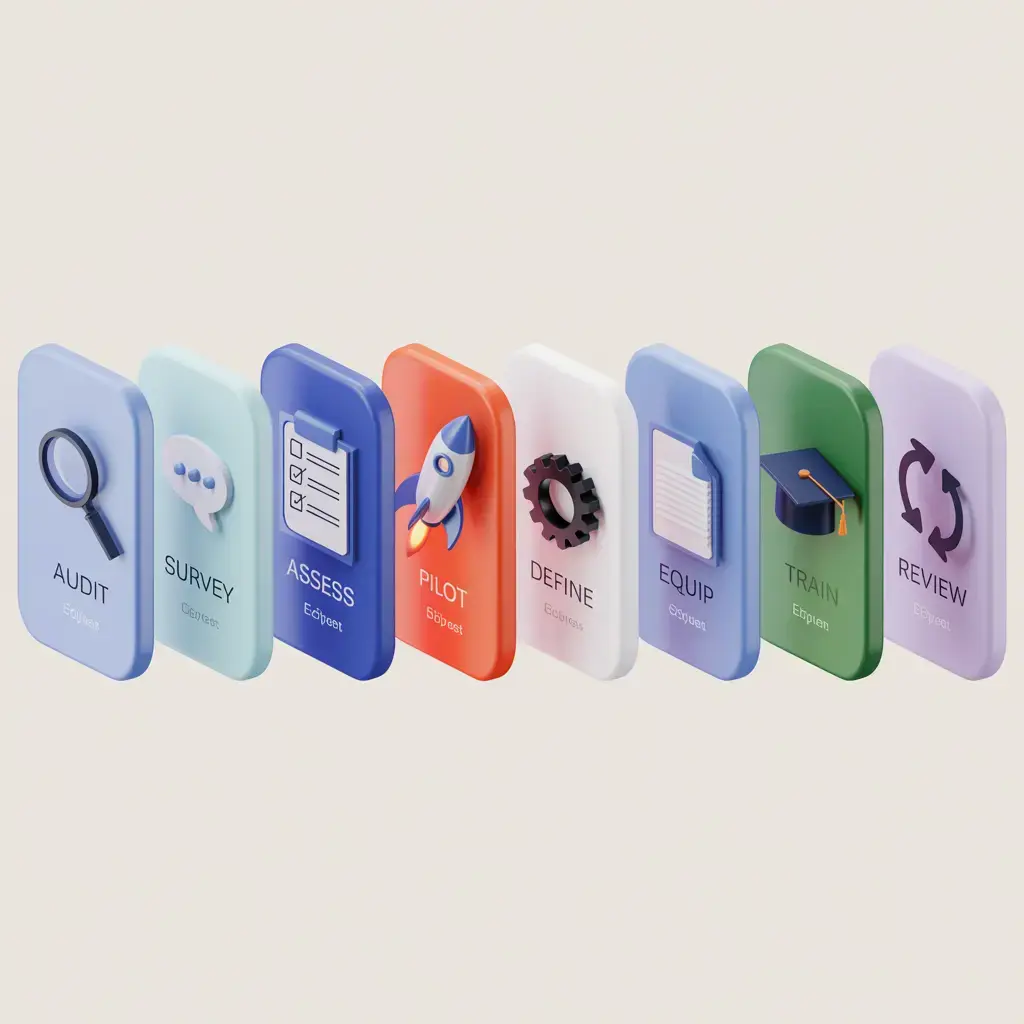
Here’s how you can do that:
Audit Roles and Tasks
- Find which roles are eligible for flexibility.
- Fix offline tasks (client meetings, townhalls) and remote tasks.
Survey Employees for Preferences
- Ask workers which FWA they prefer.
- Learn what employees like based on their demographics.
Test Business Needs
- Consider the customer with business continuity.
- Follow all legal and regulatory rules (e.g., Americans with Disabilities Act, Fair Work Act 2009, National Employment Standards, etc.).
Pilot a Program
- Pick one team to test a flexible model.
- Fix a pilot timeline and clear KPIs.
Define Policy & Process
- Create a formal remote work policy or telecommuting policy.
Complete Tools & Setup
- Install tools to track time and performance.
- Use job aids like HR systems and performance dashboards.
Train Managers & Employees
- Training on supervising remote/flexible teams.
- Provide guidelines on communication, work–life boundaries, and health and safety.
Review & Repeat
- Track KPIs & conduct one-on-one sessions.
- Ask for feedback.
- Revise policies and roll them out more frequently.
How Does the Flexible Work Arrangements Policy Work?
Remember the stat about 80% companies offering FWA? Let me share another surprising fact about that. 64% of those have informal policies, no written ones. [Source: Flexjobs]
That’s not how you should offer FWA to your employees. A strong FWA policy helps ensure clarity, fairness, and alignment.

Here’s how you can structure one - and what to include:
Purpose
Explain why the company offers flexibility (employee well-being, retention, talent strategy).
Eligibility & Request Process
- Who can apply (roles, job type).
- How to request (written request, form in HR system).
- Approval workflow (manager, HR).
Work Hours & Availability
- Define core hours, flexible windows, and availability.
- Where and how to communicate, check-ins (if needed)
Location & Setup
- Define remote location types.
- Allowance or stipend for home office setup.
- Data protection and security measures.
Performance & Accountability
- Define metrics and performance plans.
- Outline how work is evaluated (goals, KPIs, hours, etc.)
- Use regular reviews or check-ins.
Health & Safety
- Guide on breaks, posture with remote setup
- Reference health and safety frameworks, possibly local compliance.
- Include support for mental health.
PTO, Overtime & Compensation
- Define how unlimited PTO works, if offered.
- Define pay, bonuses, and benefits under different flexible models.
Non-Discrimination & Accessibility
- State commitment to fair access
- Explain accommodations for caregivers and employees with disabilities.
Review & Termination of Agreement
- Define the review period.
- Conditions for the arrangement to be modified or revoked (if performance dips, business needs change).
Verify core hours and approvals automatically
How Apploye Can Help with Your Flexible Work Arrangements?
Apploye is a world-class employee management tool. And it shines when it comes to flexible work management and monitoring.
Here’s how it can turn your FWA concept into reality:
Time Tracking for Any Work Schedule
Employers can track time from any location. Whether it’s remote, hybrid, or on-site, all in one place. With that, you can easily manage any type of work model.
Track Activity & Productivity Insights
Apploye provides productivity levels and task progress. It helps managers track work progress without regular check-ins. So, the whole team can focus on outcomes, not working hours.
Review Dashboards & Performance Metrics
Every metric, in a single dashboard. From active time to project completion, everything is perfectly highlighted in a centralized dashboard. So, managers can quickly review the work of the remote workers.
Helps Prevent Overwork
When you track every hour, employees don’t need to overwork. They can surely choose to do overtime. Yet, employers don’t have the liberty to impose more. Apploye lets you achieve that perfect balance!
Improves Policy Compliance & Transparency
Time logs make flexible work policies easier to manage. Managers can verify core hours or project timelines. Employees get transparency into how much they are working. And how their tracking data is being used.
Grows with Your Workforce
Apploye grows with your team. Even with your rapid expansion, Apploye can provide sustained support seamlessly. You can manage multiple teams and working styles without making any changes.
Keep projects on budget with live time reports
Concluding Remarks
Flexible work arrangements are changing how teams work. They bring tons of benefits with very few demerits. That’s why businesses are also switching their work schedules.
With a clear policy and flexibility, both sides can turn the workplace into something magical. And tools like Apploye let you sustain that in the long run.
Start small, measure results, and scale what works.
Monitor flexible teams with unified dashboards
Frequently Asked Questions
What is a flexible work arrangement?
A flexible work arrangement lets employees adjust when, where, or how they work. It can include remote work, telecommuting, compressed weeks, or flextime. The main goal is to give employees more control while keeping work on track.
What are some examples of flexible work?
Remote work, hybrid schedules, and four-day workweeks are common examples. Other options are flextime, ROWE, unlimited PTO, job sharing, and annualized hours.
What are the benefits of flexible working arrangements?
Flexible work boosts productivity and supports a better work–life balance. It lowers stress and cuts office costs. Companies also gain access to a wider talent pool. Burnout decreases, and retention improves. Both employees and employers win.
What are the disadvantages of flexible work time?
Communication issues, weak boundaries, isolation, and monotony if not managed well. However, all these can be fixed with a proper remote work policy.
How can you successfully pilot new flexible work arrangements?
Start with a small pilot. Survey employees and choose suitable roles. Set clear goals and define your policy. Train managers and staff. Track KPIs like productivity, engagement, and hours. Review the results and improve the model before scaling.
How can flexible work hours and arrangements impact coworker connection?
Flexible hours can reduce in-person interaction. This may weaken social bonds over time. To prevent this, create regular check-ins and virtual touchpoints. Use shared collaboration hours and clear communication guidelines. These habits keep teams connected, even when they work apart.
About Author