Productive Time: Find Your Peak Hours & Increase Focused Work

Key Takeaways
-

Productive time is when your focus, energy, and alertness are at their best.
-
Everyone has different peak hours based on their body clock or chronotype.
-
Tracking your daily routine helps you discover when you work most efficiently.
-
Using tools like timers and the Eisenhower Matrix can help organize focused work.
24 hours feel so few when you’re not productive. And the exact opposite when you are!
According to the American Productivity Audit, U.S. companies lose over $225 billion annually. Why?
Due to Lost Productive Time (LPT) caused by health issues, distractions, and mismanaged schedules (US Department of Labor). That’s nearly $1,685 per employee per year in reduced performance.
The numbers highlight the problem with productivity, not people. In this blog, we will uncover why productivity time matters and how to increase it!
In this Article,
- What Does Productive Time Mean?
- Why Productive Time Matters
- What Science Says about Productive Time
- How to Find the Most Productive Time of Day to Work?
- The Perfect Productivity Routine Plan
What is Productive Time?
Productive time is the period when your focus, energy level, and mental sharpness are at their best. It’s the timeframe of the day when you can do almost anything, effortlessly!
Don’t mix it with your work hours. In a typical 8 working hours, you might be productive for only 3 hours. And the rest of the 5 hours will count as non-productive time.
Research suggests that an average worker is productive for only 2 hours and 53 minutes a day. [Source: Inc. Magazine]
With that number, it’s crystal clear that productivity is not just about working for long hours.

Productive time varies based on your chronotype, sleep quality, and environment. Early birds often perform best between 8 a.m. and noon, while night owls may hit their stride in the late afternoon or evening.
Tip: Tag your tracked sessions (deep work, meetings, admin). The data will reveal your chronotype and when you perform best.
Start tracking your productive sessions free
Why Finding Productive Time Matters? For You and Your Business!
Trust me, without finding your productive time, you will miss out on many things. And your productivity directly correlates to profitability tracking. So, it’s an essential part for yourself and your business.
For Individuals
- Better Focus: Optimised deep work when your brain is high-functioning.
- Less Wasted Energy: Electronic distractions removal and less content switching = Better energy allocation + multitasking.
- Improved Health: More productivity means less fatigue and back pain.
- More Satisfaction: Being productive is just satisfying, period.
For Businesses
Why is tracking productive time necessary for businesses, you ask?
A study found that employees who follow their natural energy pattern showed 23% higher output and 31% greater job satisfaction. [Source: Harvard Business Review]
For a business, it means higher efficiency, better time management, and reduced performance loss.
Your business becomes more productive when you use tools like Apploye. The ability to track time approvals and average hourly rate per project is amazingly helpful.
Track your team's productive hours today
What Does Science Say about Productive Time?
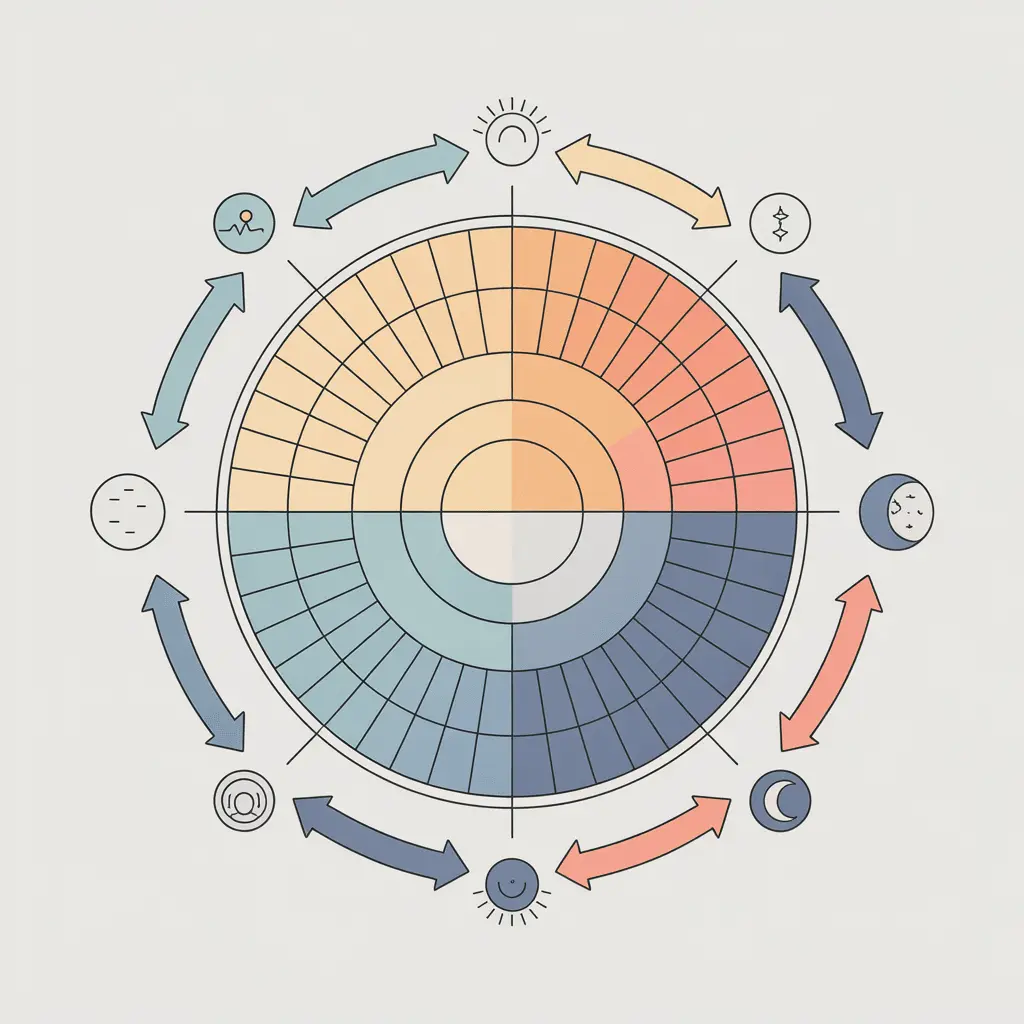
Your biological clock or circadian rhythm controls sleep, hormones, and alertness. Ignoring it leads to fatigue, low focus, and reduced work performance.
A major example of circadian rhythm is the sleep-wake cycle. It basically means your waking up and sleeping pattern. Simply being aware of your sleep pattern can hugely impact your productivity cycle.
Now, the circadian rhythm is directly connected to the ultradian rhythm.
An ultradian rhythm (derived from Latin “ultra diem”, meaning beyond a day) consists of a 90-120 minute period of high-frequency brain activity.
The high activity or ultradian peak is followed by a 20-30 minute rest period (ultradian trough). This pattern repeats throughout the day and night. So, science has actually given us enough hints to be more productive!
What do Statistics Say about Productive Time?
A study reports that early birds show better mental clarity and stronger immune systems. [Source: Forbes]
However, that only makes sense if you’re a morning person. So, you have to be mindful of your chronotype as well. Oh, what’s a chronotype?
Chronotype is nothing but your body’s natural preferences for waking up and sleeping. Some genetically prefer the sunshine while others lean towards the moonlight.
What’s the final understanding then? The peak productive time comes according to your natural patterns, as per scientific findings. So, you become more productive when you embrace your genetic preference.
Productive Time of the Day
All the theories aside, here are some clear stats about productive time of the day:
- 10:26 AM is the most productive moment of the day, as some studies suggest. [Source: When: The Scientific Secret of Perfect Timing]
- The productive time in America varies from 10:54 am to 3:06 pm, depending on the state. [Source: Today.com]
- Monday & Tuesday are considered to be the most productive days of the week. [Source: Robert Half Press Release]
- Saturday and Sunday are the most unproductive days of the week (obviously!).
Do you agree with these stats? Well, all of these are credible surveys, so they definitely have some weight to them. But let’s focus on how we can find out your most productive time of the day!
How to Find the Most Productive Time of Day to Work?
To quote Socrates, “Know Thyself”. It’s so true if you’re figuring out your productive time of the day. You’ll soon find out why!
Understanding Your Biological Chronotype
Are you a morning person or a night owl? That’s the first question and step to understanding your productivity flow. Your genetics hugely affect your energy management and cognitive performance.
Figuring out your chronotype is not that tough. Try to wake up at your own preference and see when you work the most.
If you wake up early, yet you're productive after 3 PM, then you know what chronotype you are.
Discover your peak hours with time tracking
Use Productive Timer
Time tracking is an integral part of a productivity system. Remember the ultradian cycle, those 90-120 minute blocks? The Pomodoro technique perfectly fits with that.
The Pomodoro technique follows a 25-minute work pattern with small time breaks. It lets you unwind and start working again with more energy.
The technique also helps you to track your time easily. Check your daily time logs for recurring productivity spikes. Over a few weeks, the pattern will reveal your most productive blocks.
This objective insight helps reduce non-billable time and ensures accurate budget tracking.
Figure out Productivity Blocks
Focus block is the practice of time blocking to ensure deep and focused work. When you have found out your productive timing, you can use the task batching technique. Just organize similar tasks together so that you can finish them quickly, all at one go!
Moreover, make sure to take a small break after each focus block. It helps to remove the attention residue and focus on the next task effectively.
Apply the Eisenhower Matrix
You probably already know about this one, right?
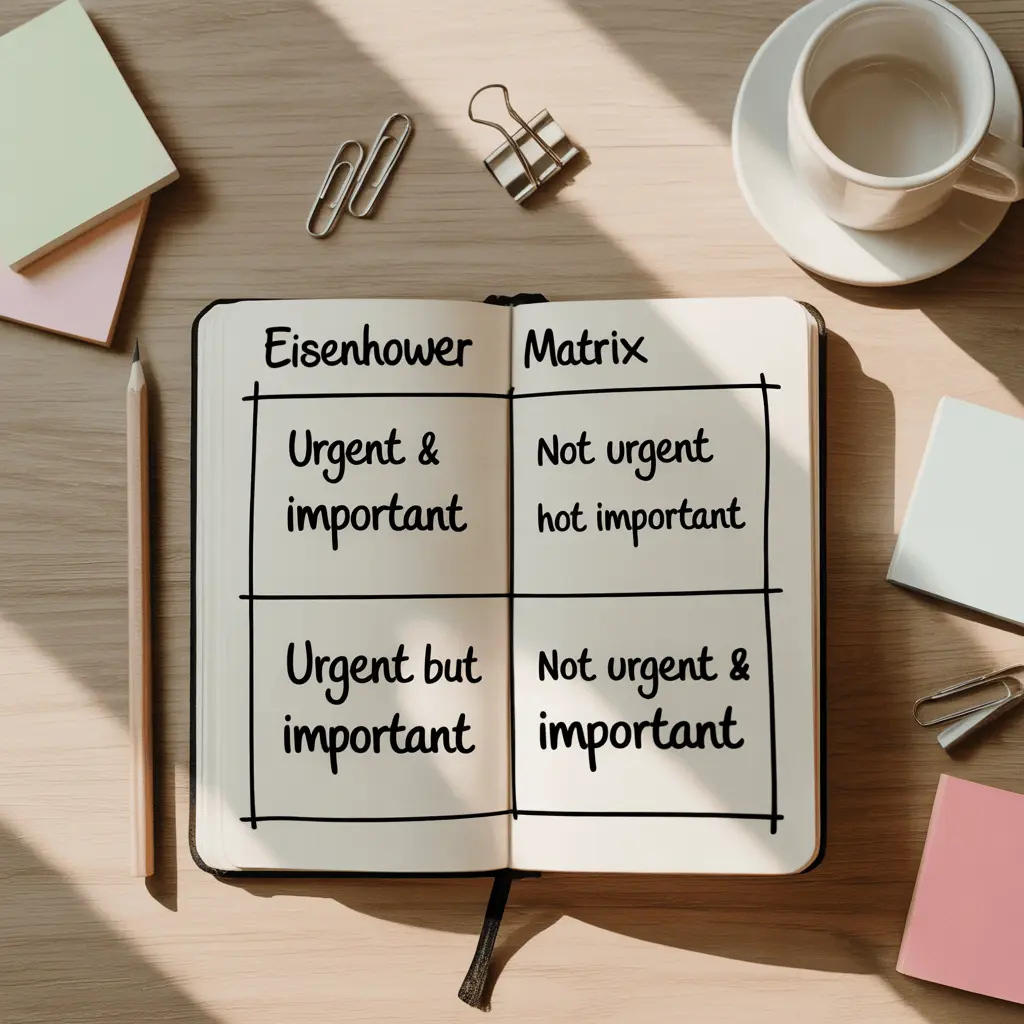
Here’s a quick example of how you can apply that in your workplace:
You can refer to this matrix to organize most of your daily tasks and optimize accordingly.
Experiment with Your Routine
A productivity experiment can be another key to finding your true self.
Start by picking a few everyday tasks that reflect your real work. It can be anything that you do every day for work or yourself. For example:
- Write a short paragraph or brainstorm ideas for a project.
- Analyze data or complete a short spreadsheet task.
- Organize emails or plan your next day’s to-do list.
- Read and summarize a short article.
- Do a 20-minute deep-focus session on a challenging task.
Next, test yourself at different times of the day. Do the same task in the morning, afternoon, evening, and night. Make sure you’re following work productivity metrics for accurate tracking.
Then, you will see a certain pattern emerge. The productivity dashboard might reveal that you take the least time just before 5 PM. So, that’s your productive time of the day!
Log daily tasks and spot your patterns fast
Focus on the Nighttime Routine
Believe it or not, productivity starts when you focus on your sleep. Because you don’t get quality (not quantity) sleep, you become lethargic. It also causes decision fatigue.
However, when you do get proper sleep, you get a scientific boost!
A study showed that improving sleep quality was linked to a 15-20% boost in focus during work hours. So, regardless of when your productive time is, focusing on your sleep pays off.
Work on Your Body
Just like quality sleep, physical activity is equally important. Whether it’s a morning walk or light exercise, pumping your heart will get you going.
Also, whenever you’re tired from work, make sure to move for 5 minutes or more. Don’t just doom scroll on social media. Go outside, have some fresh air, and start again. While this will not directly reveal your most productive time, it’s necessary to be more efficient!
Ask for Feedback
You may not realize this, but your colleagues and family members can help you figure out your productive times. How?
Some of your coworkers may have attention to detail. And when they work with you, their attention can benefit you. They can share valuable insights about your patterns that you never realized.
Ask your manager or peers when you are engrossed in uninterrupted work. Then, you can easily check your time journal or time tracking data for confirmation. This feedback loop turns your routine into a personalized organizational system.
How to Bring Out More Productive Time Every Day? [With Productive Schedule Example]
Every good deed starts with consistency. And so does productivity. If you want to be more productive throughout the day, you need to be self-aware.
Ask yourself about your daily routine. Make a detailed schedule around your peak productivity hours. For your reference, I have just the thing you’ll love to get started!
For Early Risers
If you’re an early bird, you most likely love to start your work by 8 AM. Here’s a solid schedule that will help you stay in your productive groove:
For Night Owls
If you’re a night owl, the peak productivity curve rises around the afternoon or evening. So, based on that, here’s a schedule you can work with for peak productivity:
When you follow this schedule for a while, you will start noticing the difference. Your circadian rhythm will be adjusted for a more energised workflow. And finally, you will find your most productive time of the day.
Build your schedule with smart time tracking
A 30-Day Work Plan to Find Your Perfect Productivity Routine
Look, following a productivity schedule is a great way to start. But when you pair it with a month-long roadmap, the actual benefits start to reveal.
Why does a 1-month or 30-day productivity plan work? Because working with a focused goal for a month builds consistency. Also, it allows you to identify any limitations or blocks early on. So that you can ultimately decide on the perfect schedule for productivity.
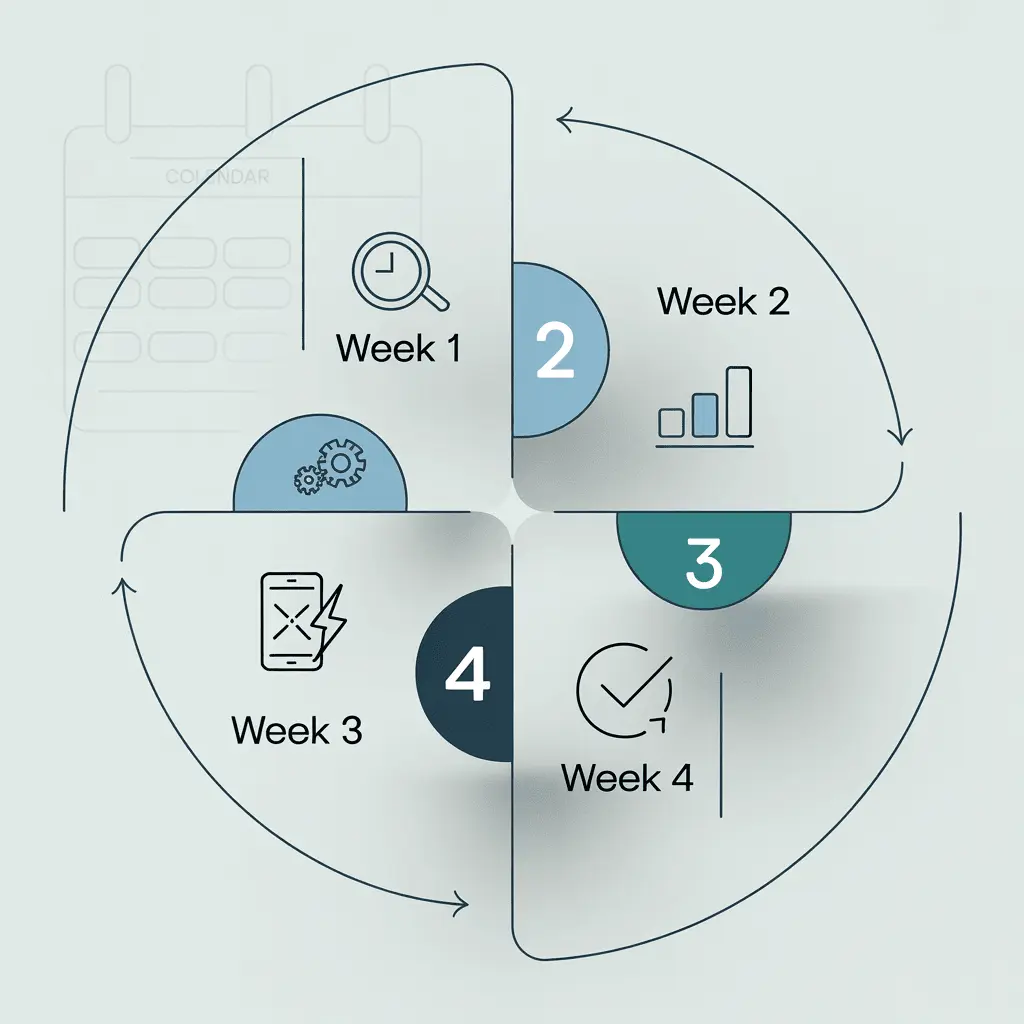
With that being said, here’s the work plan for you to check out:
Week 1: Observe & Learning more about Your Peaks
First and foremost, take your time to observe. Your work pattern, your sleeping habits, and your food intake. Take all of these and note them down.
Then, focus on what you don’t do to be more productive. Are you missing your breakfast? Or, do you go straight to work without any physical activity?
Here, your family and coworkers can help you understand your habits as well. Ask them when you’re “just on a roll” or too intense while working.
This data will help you to structure your perfect productivity routine.
Week 2: Structure According to Your Strength
By the end of week 1, you should have an idea about what’s holding your productivity back. Keep that in mind, you’ll need to work on it now.
I’m expecting you have already found your productivity peaks (if you haven’t yet, check out the earlier section!). So, schedule a difficult task in that period.
You can use a Pomodoro timer or any other productivity hack to improve your focus. Track your actual timing of that particular work for future reference.
Week 3: Eliminate the Distractions
You obviously need to take a break after a while. However, make sure not to fall into the doom-scrolling trap. It’s really important to move physically when you’re mentally fatigued.
Moreover, you should also avoid content switching while you’re working. To achieve proper focus, batch similar tasks together.
Finally, continue this for a week to engrave it into your productivity routine.
Week 4: Review & Repeat
At the end of the month, you just need to review everything.
Is the focus block working for you? Or, do you need to change your strategy to something else? Most likely, you’ll need to make a few tweaks to optimize it further.
You can also ask your peers & managers to review it. They can also add some insights and suggestions. Eventually, you can integrate that into your workload!
Start your 30-day productivity journey free
Conclusion
Your productive time is your most valuable currency. It’s not measured in US dollars, but in focus, energy, and growth.
By understanding your chronotype, tracking time with Apploye, and creating a balanced schedule, you can achieve more in less time — without burning out.
Every worker, team, and business can transform their day by protecting their peak hours. Whether you manage remote employees or work independently, knowing when you perform best is the foundation of success.
Frequently Asked Questions
What is the meaning of productive time?
Productive time means the hours when you get meaningful work done efficiently. It’s when your focus and energy are high, and you make real progress on important tasks. Using this time wisely helps you finish work faster and with better results.
What is an example of a productive time?
A productive time could be early in the morning when your mind is fresh and free from distractions. For some, it could be late at night when it’s quiet and easier to concentrate. The key is finding the time when you naturally perform your best.
What is the meaning of productive hours?
Productive hours are the specific times of day when you work most effectively. During these hours, your energy, creativity, and focus peak. Knowing your productive hours helps you plan your day smarter.
How to find your most productive hours of the day?
Track your work habits for a week and notice when you feel most alert and focused. Use that data to plan your important tasks during those peak hours. Over time, you’ll spot clear patterns that show when you work best.
How many hours per day should we be productive?
Most people can stay truly productive for about 4 to 6 hours a day. Beyond that, focus and quality often drop, so breaks and rest are important. It’s better to work efficiently in short, focused bursts than to push through exhaustion.
What is the best time to wake up to be productive?
The best time to wake up depends on your body clock. Many people find waking up between 5 a.m. and 7 a.m. helps start the day early and stay focused longer. A consistent wake-up routine also boosts energy and discipline.
What is the most productive time for using the brain throughout the day?
For most people, the brain works best in the late morning, between 9 a.m. and 12 p.m. Night owls may find their mental peak in the evening instead. Knowing your brain’s rhythm helps you schedule demanding tasks more effectively.
About Author