A Guide to Fostering Workplace Equality with Monitoring

Key Takeaways
-

Workplace equality with ethical monitoring ensures accountability without invading personal space.
-
Only real-time monitoring can reveal all types of bias in the workplace.
-
When employees understand what's tracked and why, they support equality initiatives.
-
Employee monitoring tools ensure remote employees receive equal opportunities and recognition across time zones.
As an employee, you might face a question in your mind: 'Why am I not?'
If it's not you, then you’ve seen it before. A coworker gets promoted faster, but a talented teammate doesn't. It might not be intentional, but it happens more often than people realize. Managers can't know the details of their employees. So, they can't make the real assessments.
That’s where workplace equality monitoring makes a real difference. It helps you see what’s actually going on behind the scenes.
By acting on that data, you can build a fair workplace.
In this article,
- Importance of workplace equality monitoring
- How smart employee monitoring can secure equality
- Create a data-driven equality from insight to action
What is Workplace Equality Monitoring?
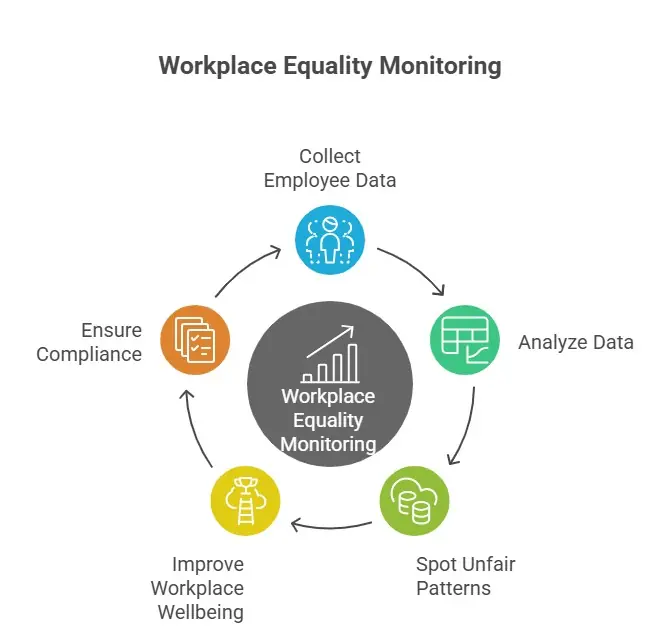
Workplace equality monitoring is tracking and analyzing employee data to ensure fairness and equity. It helps human resources spot unfair patterns in hiring, pay, promotions, and opportunities. With HR dashboards, you can see real-time data to find out the work status and problems. By using data-driven insights, you can improve workplace wellbeing.
In many countries, it's not just best practice, it’s a legal requirement. Equality monitoring is both a fairness tool and a compliance safeguard.
Read More:
What is Employee Monitoring?
Workforce Analytics: Definition, Types, and Examples
Improve fairness with smart tracking
Why Workplace Equality Matters
Workplace equality is a powerful driver of business performance. A diverse and inclusive workforce enhances innovation and improves productivity. Companies that practice diversity, equity, and inclusion get tangible financial benefits.
About 36% of employees put in extra effort if they feel they are paid fairly for their work. [Source: Great Place To Work®]
Identifies Gaps
Monitoring helps you find where inequality exists in your workplace culture. Without tracking data, it’s easy to miss unfair patterns that might be holding people back. You may see a common pattern that most leadership roles are filled by one group of people. According to Zippia’s 2025 data, U.S. leaders are:
- 61.2% White,
- Hispanic/Latino at 17%,
- Black or African American at 11.9%, and
- Asian at 5% [Source: Zippia]
Also, certain candidates aren’t getting hired as often, despite having similar qualifications. Once you can see these gaps clearly in your data, you can take real steps to fix them.
Helps Eliminate Bias
Employee monitoring creates equal chances and fair pay regardless of gender, age, or background. By tracking data over time, you can see if your workplace has more diverse teams. It provides an equal opportunities policy.
For example, older employees are less likely to get promoted. Or people from certain backgrounds aren’t being hired as often. Employee monitoring helps you spot these trends early and take action for dispute resolution.
Track team performance with real-time insights
Compliance with Laws and Regulations
Monitoring helps you stay compliant with laws and regulations. When you collect workplace data, it should follow the employment and data protection laws. Always ensure data is used only for fair and lawful purposes. Keep it secure and shared transparently.
When people believe that the company respects their privacy, it strengthens morale and promotes a positive company culture.
Builds Trust and Transparency with Employees
Monitoring helps you build trust and transparency with employees. When your team knows about your fairness, employees feel valued. The valued employees are happy employees. Eventually, they work harder and are 12% more productive.
Being transparent shows them that decisions are based on facts, not favoritism. In short, monitoring done with transparency turns equality everywhere.
Employee Monitoring: The Real Solution for Workplace Equality
Workplace bias isn't always intentional. In most cases, it happens unknowingly. Sometimes it’s subtle and hard to notice.
Managers might give more opportunities to people they interact with more often. Or favor certain groups or backgrounds. This brings the unequal treatment in the workplace.
This is where ethical employee monitoring plays the key role.
It enables you to oversee your employees. Employee monitoring tools, such as Apploye, turn subjective opinions into measurable insights. Features such as time tracking, project monitoring, screenshots, and recordings provide real-time data.
Based on the data, it creates reports. You can use them for your HR policies. So, you can make fair, data-driven decisions based on actual contributions.
A great example is HubSpot. It uses monitoring tools to track performance metrics, promotion rates, and workload balance. Similarly, Buffer runs a fully remote social media company using these analytics and productivity tools.
Later in this article, we'll see how Jezweb makes a fair workplace with Apploye.
Turn time data into fair decisions today
Establishing Your Data-Driven Equality Framework
Define Clear Objectives and Key Performance Metrics
Define specific and measurable objectives for employee monitoring. What aspects do you want to improve? Are you focused on payment, discrimination complaints, or fairness? It will help you to improve the inclusion initiatives.
Once objectives are set, identify the key metrics and code of conduct. Your metrics may include promotion rates, pay equity ratios, and other relevant metrics. Embrace the EEO policy to make it stronger.
Be Transparent with Security Measures
Always let your employees know what and why you’re collecting data. Ensure fairness, not to judge individual performance. When you’re open about your goals and methods, employees are more likely to support the process. Also, they will feel confident that it’s being done for the right reasons.
Ensure Anonymity and Confidentiality
You should always make sure personal information is kept anonymous and confidential. Group the data by department or role to look for patterns. Follow privacy laws such as GDPR, CCPA, Americans with Disabilities Act, and other regulations.
Collect Only Necessary and Relevant Data
Focus on the data you truly need to assess equality. Collecting too much information is unethical and makes people uncomfortable. Avoid details like personal interests or beliefs. Focusing on relevant data keeps monitoring efficient and ethical.
Communicate Findings and Take Action
Once you’ve analyzed the data, share the key findings with employees. Highlight both strengths and areas for improvement. Then, take visible actions. You can update hiring practices, increments, or training opportunities.
Protect privacy with secure data collection
Actionable Steps for Workplace Equality
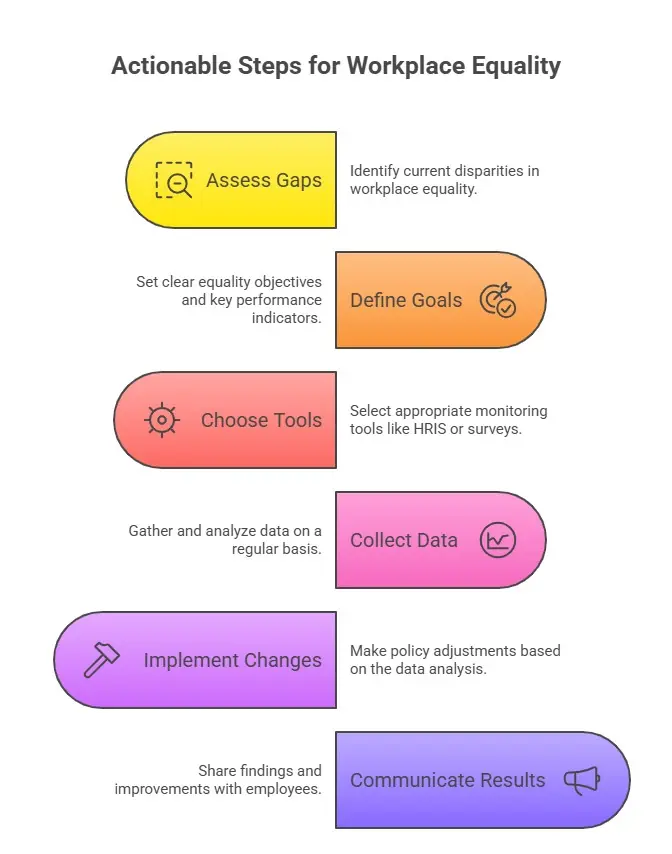
Dive into every corner of your organization to find the shortcomings. You may see some teams aren’t as impeccable as they should be. Or, suggested promotions don’t seem fair.
Once you’ve identified the issues, set some goals to reduce them. For that, you can use some metrics and tools. Like HRIS systems, employee surveys, or analytics dashboards can help you.
Don’t just take a look once and move on. Review your equality data regularly. This way, you can improve your system or fix some issues before they grow.
Revise your policies, address any unfair practices, and take the employee feedback. Ensure that every employee feels valued. Remember, small and consistent changes can lead to significant improvements.
Conclusion
Fostering workplace equality is a continuous journey. Data helps you see where barriers exist, make fair changes, and track progress over time. By using data-driven monitoring, your organization can take clear and measurable actions.
Also, building an equal workplace takes honesty and commitment. Leaders must be open, accountable, and use data to build trust. Over time, it creates a supportive environment for everyone.
It results in a future of work that isn’t just diverse. It’s fair and transparent.
Start building workplace equality with data
Frequently Asked Questions
What are the best practices for creating a positive and inclusive workplace culture?
Start with open communication where all voices are heard and valued. Unconscious bias training can help managers enforce fairness. Encourage teamwork and provide equal opportunities. Ensure monitoring can create measurable change for everyone.
Are there any tips for improving employee engagement within the organization?
Share the company goals and communication openly. Employee recognition and reward can be truly helpful. Motivate them with the growth opportunities and clear career paths. Also, encourage flexible work hours and work-life balance.
How can we promote equality in the workplace?
Use data to address the gaps and identify the actual employee effort. Set clear rules to prevent discrimination. Transparent employee-employer communications can foster the process. Allow employees to see their performance and track their progress regularly. Hold leadership accountable through measurable equality metrics and regular audits.
How to monitor equality and diversity in the workplace?
Ethical employee monitoring systems are the right tools for any organization. Use surveys and feedback to understand employee experiences. Keep data anonymous to protect privacy. Share results transparently. Regularly review progress to ensure policies stay fair.
How often should we conduct equality monitoring?
Ideally, it should be once or twice a year. This helps track progress, spot new gaps, and measure the impact of diversity and inclusion efforts. However, if your organization applies new policies, quarterly reviews can be useful. The key is that consistent inspection can make the real changes.
How do we balance monitoring with employee trust?
The key is transparent communication. Clearly explain why and how you're doing the monitoring. Focus on fairness, not control, and protect employee privacy at every step. Share results openly and use insights to improve work conditions.
What is the purpose of monitoring in relation to equality and diversity?
The purpose is to ensure fairness in every sector of an organization. It helps reveal the gaps in pay, hiring, and promotions. The goal is to build a more inclusive, transparent, and equitable workplace for all employees.
About Author