Employee Monitoring Market is on Track to Hit $7.6 Billion by 2029. Here’s Why
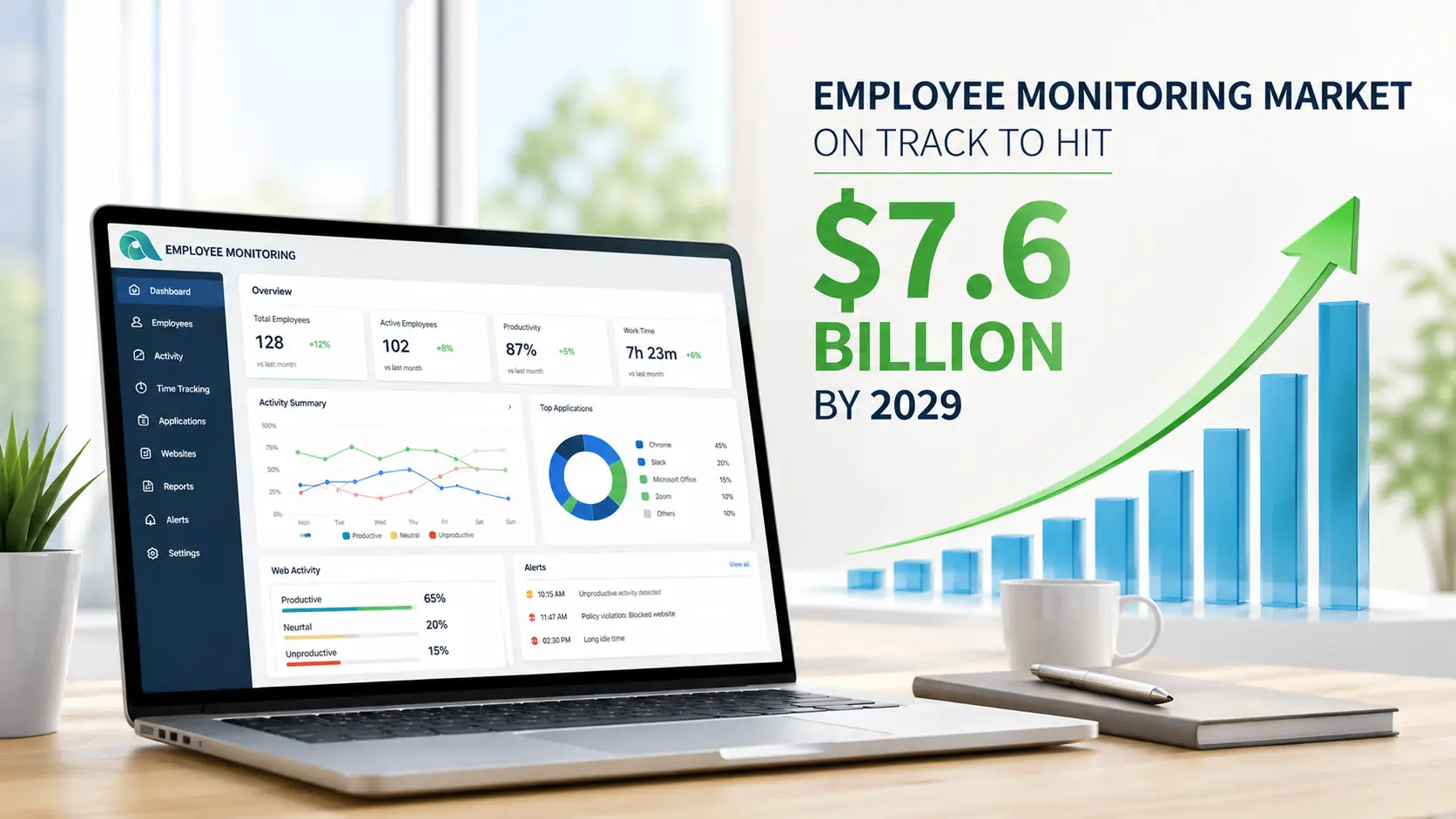
The global employee monitoring software market is expected to grow from about $7.27 billion to $7.61 billion by 2029. This means the compound annual growth rate (CAGR) is around 16.9% to 18.1% each year, according to The Business Research Company.
This big growth is happening for three main reasons.
First, more people are working from home or in mixed office-home settings now.
Second, companies need better ways to protect their computer systems.
Third, new AI tools are helping businesses track how well their workers are doing.
Why the Employee Monitoring Market is Expanding Rapidly
Here are the primary reasons for the market's rapid expansion:
1. Rise of Remote and Hybrid Work Culture
Before 2020, remote work was often treated as a special benefit or limited arrangement. Since the pandemic, many organizations discovered that employees could work outside the office while still meeting business goals. As a result, remote and hybrid models became long-term workplace strategies rather than temporary solutions.
Let’s see why remote work culture has become so popular:
Employees Want Flexibility
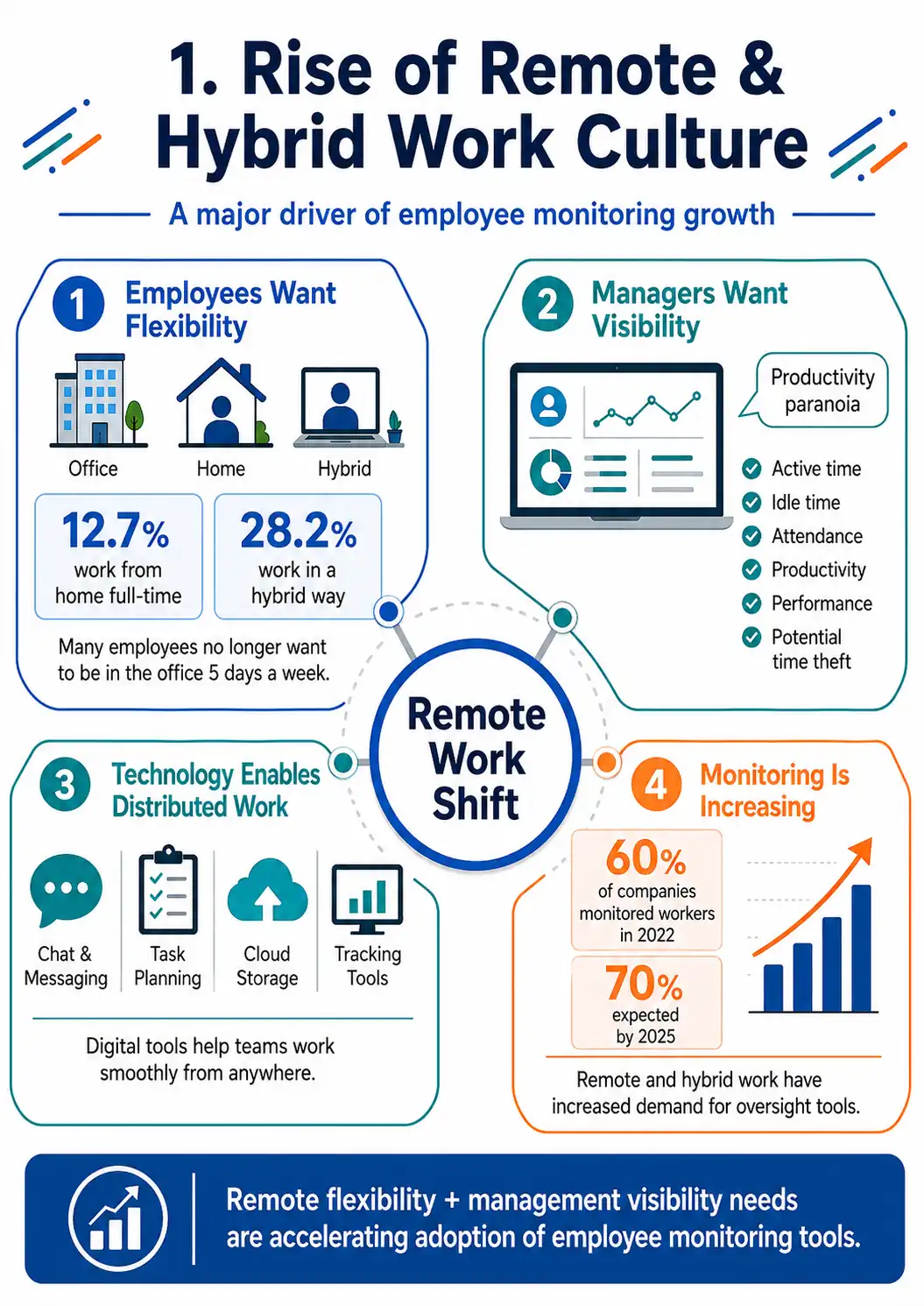
More and more employees now work in a hybrid way. Forbes shared that 12.7% of workers work from home all the time, and 28.2% work in a hybrid way. These numbers tell us something important. So, many people don't want to work at the office five days a week anymore.
Companies are Trying to Maintain Control and Visibility
As employees work outside the office, managers cannot observe work in the same direct way. This creates concerns about productivity, attendance, active hours, and accountability. The content calls this “productivity paranoia,” meaning managers may worry that employees are not working enough even when performance outcomes are being met.
Because of this, companies increasingly use remote employee monitoring tools to track:
- active time
- idle time
- attendance
- productivity
- performance
- potential “time theft”
Technology Supports the Shift
Remote and hybrid work are easier to sustain because digital tools now allow companies to manage distributed teams.
Today, companies use chat programs, task planning apps, online storage, and tracking tools. These tools help businesses run smoothly. Now, not everyone needs to work in the same office.
Employer Monitoring is Increasing
Gartner reported that in 2022, 60% of companies watched their workers. And by 2025, this number has to jump to 70%. This shows more people are working from home or doing a mix of home and office work. Also, companies are finding new ways to keep track of what their employees do.
2. Escalating Cybersecurity and Data Protection
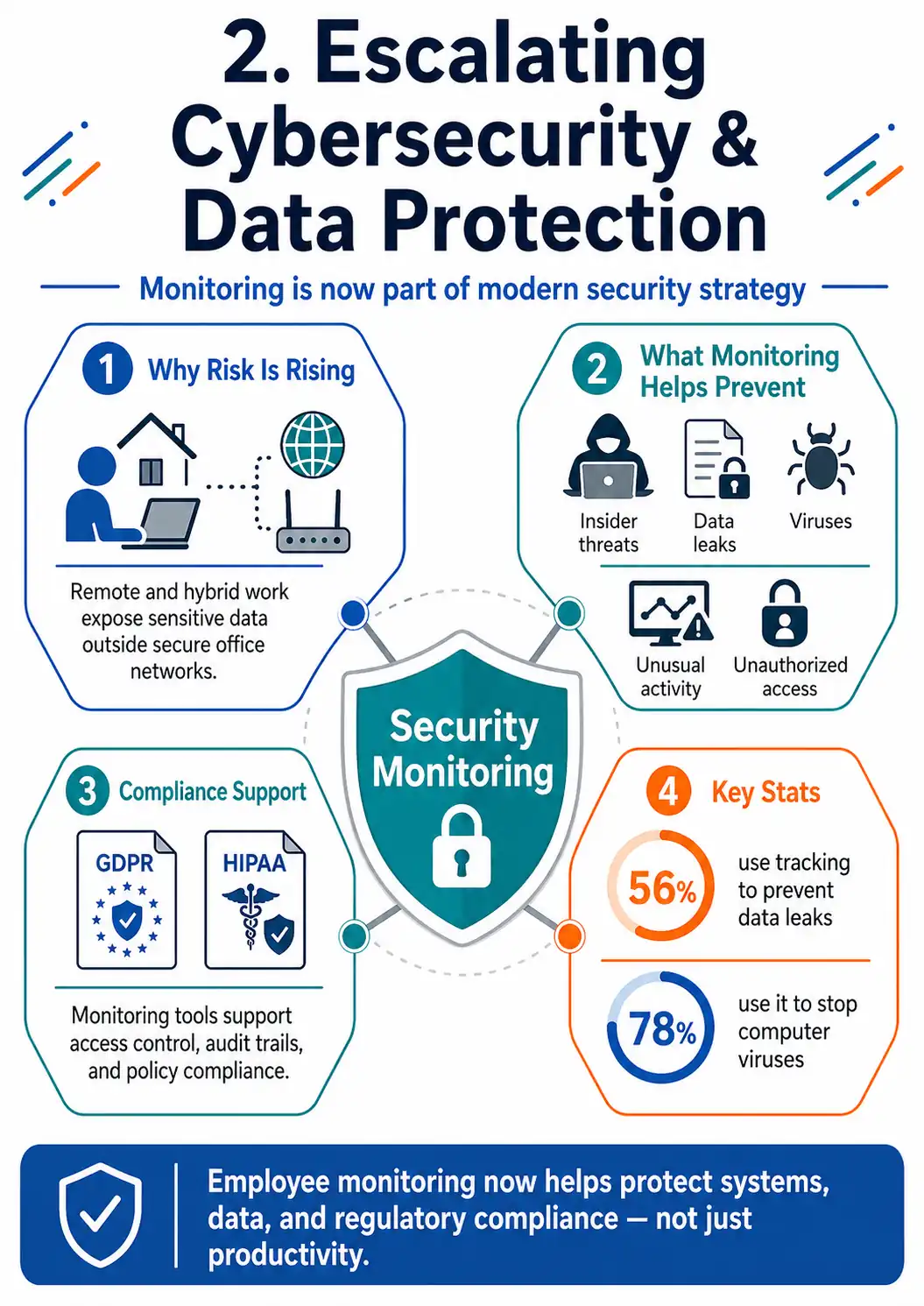
Cybersecurity is becoming a key driver of the employee monitoring market. Companies now use monitoring not only for productivity and attendance, but also to detect insider threats, prevent data leaks, and protect systems from viruses.
Remote and hybrid work has increased these risks because employees access sensitive company data outside secure office networks. As a result, monitoring tools help track unusual activity, control access, and support compliance with regulations like GDPR and HIPAA.
The data shows this shift clearly: 56% of businesses use tracking to prevent data leaks, and 78% use it to stop computer viruses. This makes employee monitoring an important part of modern data protection and security strategies.
3. AI and Advanced Data Analytics Integration
Here’s how AI and advanced data analytics are making employee monitoring tools more sophisticated and attractive to businesses:
4. Adoption of BYOD (Bring Your Own Device) Policies
As remote and hybrid work models keep rising, employees use personal laptops, phones, and tablets to access work emails, apps, and company data.
This creates security risks because personal devices may not have the same protection as company-owned devices. To reduce these risks, businesses use employee monitoring software to track computer activity, detect suspicious behavior, prevent data leaks, and ensure operational compliance with company policies.
As more companies allow BYOD, the need to protect corporate data on personal devices increases. This is helping drive growth in the Employee Monitoring Market.
5. Increased Adoption by Small and Medium-Sized Enterprises (SMEs)
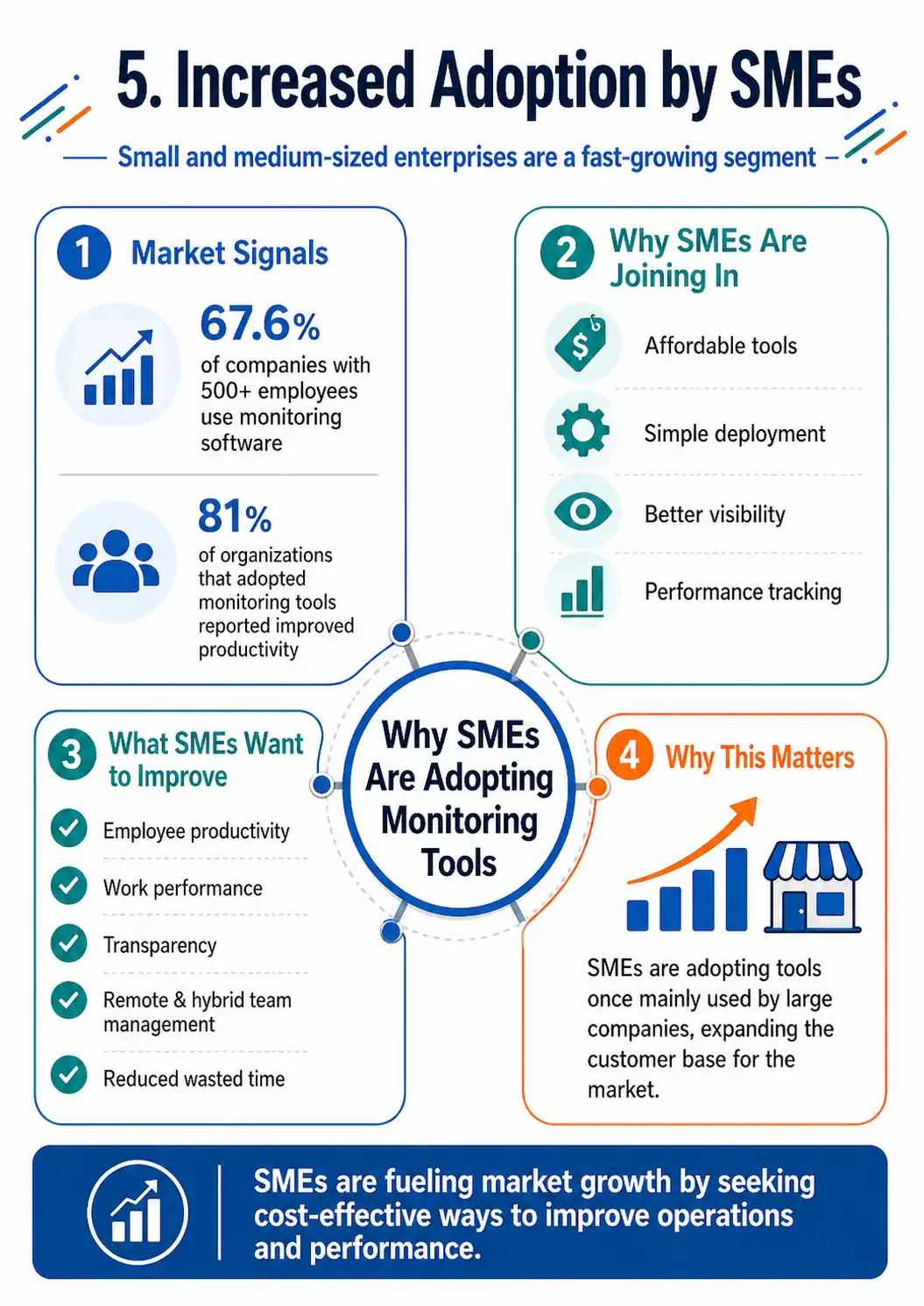
According to data from Empuls, monitoring software is already common in bigger firms, with 67.6% of companies with 500+ employees using it. Also, 81% of organizations that adopted monitoring tools reported improved productivity.
But now SMEs are helping expand the employee monitoring market because they are now adopting tools once mainly used by large companies. They are using these tools to:
- improve employee productivity
- track work performance
- increase transparency
- manage remote and hybrid teams
- reduce wasted time and inefficiencies
This makes SMEs a fast-growing customer segment in the employee monitoring market, as more small businesses look for affordable ways to improve operations and performance.
6. Cloud-Based Solutions and Digital Transformation
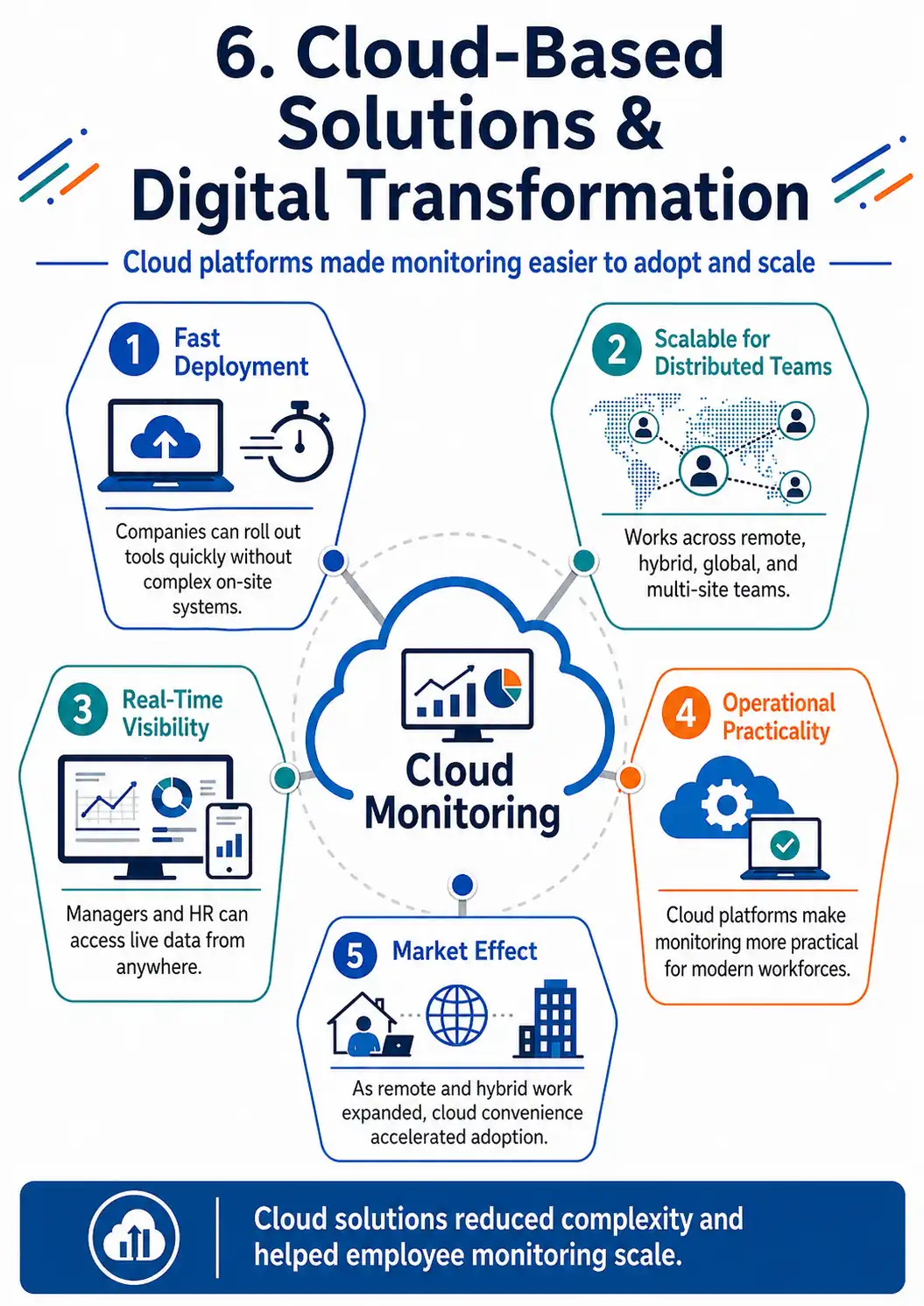
Cloud-based monitoring solutions made employee monitoring easier to adopt and scale. Companies no longer needed complex on-site systems; they could deploy tools quickly across remote or global teams. These platforms also allowed managers and HR teams to access real-time data from anywhere. This makes monitoring more practical for distributed workforces.
As remote and hybrid work grew, this convenience helped expand the employee monitoring market.
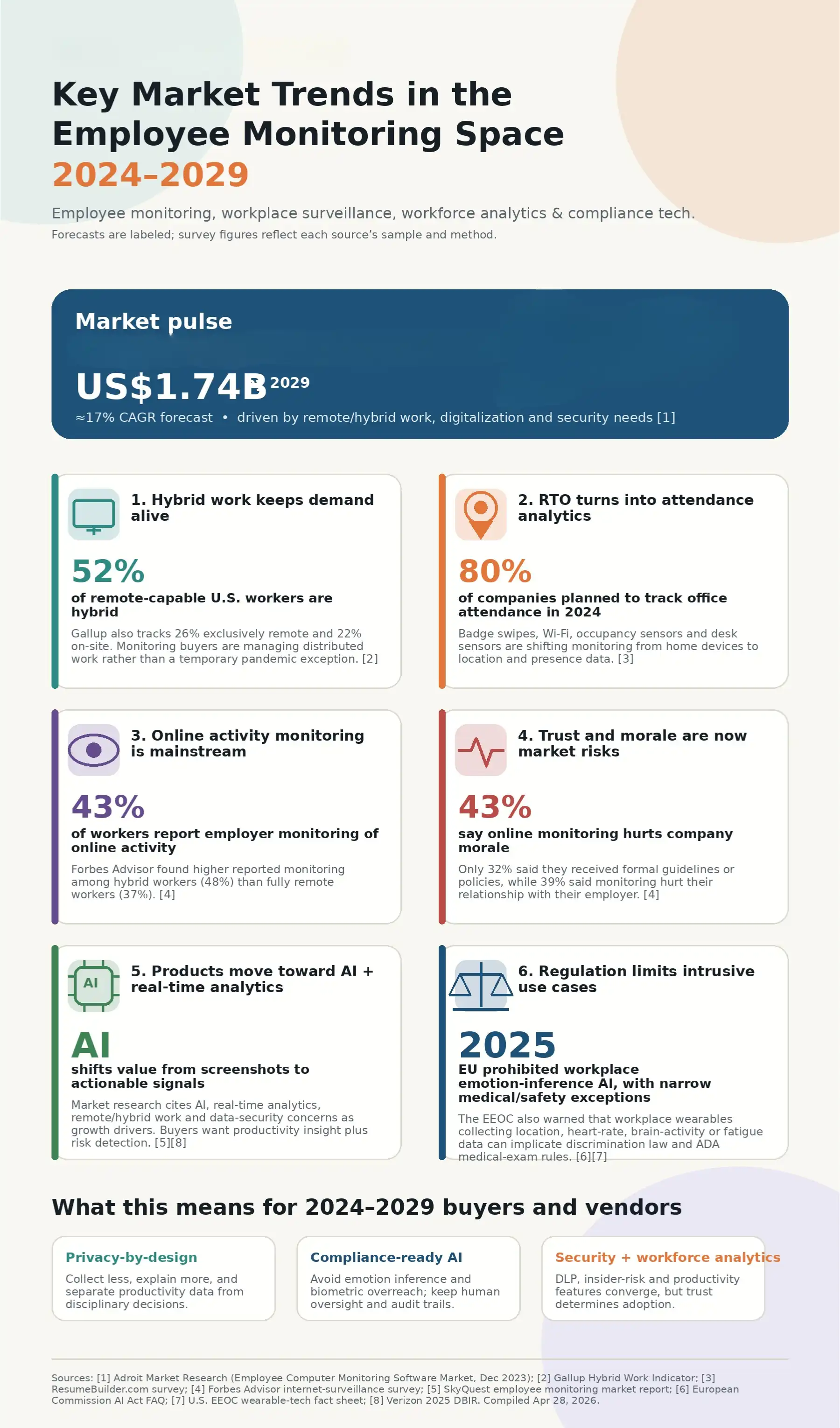
Key Market Trends in the Employee Monitoring Space (2024–2029)
Non-Invasive Monitoring
Non-invasive monitoring is becoming a key trend because companies want to balance productivity tracking with employee trust and well-being.
Instead of using intrusive methods like webcam monitoring, keylogging, or constant surveillance, businesses are shifting to softer signals such as active time, app usage, task progress, and work patterns. This helps reduce worker stress, protects privacy, and makes monitoring feel less like spying.
The market trend is clear: employee monitoring tools are moving from surveillance-focused to trust-based productivity insights. This approach helps companies keep teams accountable while avoiding backlash, improving morale, and supporting healthier work cultures.
Gamification
Some organizations are introducing gamification techniques into time tracking to motivate employees and improve performance. For example:
A Technology with Growing Responsibility
Employee monitoring is a technology with growing responsibility because its use is expanding, but its impact on workers is serious.
For instance, 1 in 3 employees say workplace surveillance has hurt their mental health. SoftwareSeni also reports that 68% of employees oppose AI-powered tools that predict worker behavior. These numbers suggest that many employees are uncomfortable with how monitoring technology is being used.
The stress impact is also important. According to high5test.com’s analysis of Pew Research data, workers in high-surveillance workplaces show stress rates of 45%, compared to 28% in lower-surveillance environments. This shows that heavy monitoring can affect employee well-being and workplace trust.
The main issue is that adoption is growing faster than the rules and practices needed to manage it responsibly. Companies that use employee monitoring without clear policies, fair limits, and open communication risk damaging the trust that supports performance.
Focus on Outcomes
The market is shifting because companies want proof that work is getting done, not just proof that someone is “active.”
Older monitoring tools tracked keystrokes, mouse movements, screenshots, and idle time. That can create mistrust and reward performative busyness.
Newer tools are more appealing because they focus on outputs: tasks completed, deadlines met, project progress, customer issues resolved, and team bottlenecks. This fits remote and hybrid work better, where productivity is harder to judge by “being online.” The market is also responding to privacy and trust concerns around invasive tracking.
Major Industry Leaders in the Employee Monitoring Market
The employee monitoring market includes several types of providers: productivity analytics platforms, time-tracking tools, workforce-management systems, and security-oriented monitoring platforms.
Here’s how major industry players are approaching employee monitoring from different angles:
What the Experts Think About this Expanding Employee Monitoring Market
Experts agree that companies are spending more money to watch their workers. However, they don't agree on whether this is good or bad for workers. Market experts say companies want these tools because of remote work, keeping data safe, following rules, and using AI to study workers. For example, Research and Markets says the employee monitoring software market is worth $4.9 billion in 2025. They think it will grow to $22.8 billion by 2034. Another company, Fortune Business Insights, looks at a smaller group of monitoring tools. They say the market is worth $648.8 million in 2025 and will grow to $1.78 billion by 2034. The numbers are different because the companies count different types of tools. But both companies see the same pattern: the market is growing fast.
That growth is also changing how vendors and workplace-technology experts talk about the category. “The data makes one thing clear. Employee monitoring software is no longer a fringe practice. It is a central part of how modern businesses manage distributed work,” said Sheikh Shourav, Founder & CEO of Apploye. “But the same data also shows that how monitoring is used matters just as much as whether it is used. Transparent and purpose-driven monitoring is what separates tools that help teams from tools that harm them.”
Organizational researchers are more cautious. An NBER study found that watching workers with computers didn't really make them do better. Instead, what helped was when bosses clearly explained why they were watching workers or why they stopped watching them. In other words, experts now say that watching workers doesn't replace good leadership.
Privacy and labor experts worry about "surveillance creep." Eurofound warns that constant, detailed monitoring creates big risks. First, it threatens workers' privacy rights. Then, it makes data-protection rules hard to follow. The GDPR rules say companies should be clear about how they use data. They also say companies should only collect the data they truly need. However, monitoring tools gather huge amounts of information about workers.
Mental-health experts also see risk. The American Psychological Association reported that 56% of monitored workers felt tense or stressed during their workday. In contrast, only 40% of workers without monitoring felt this way.
Legal experts’ view is that the market can keep growing, but the compliance burden is rising. A Reuters legal report from April 27, 2026, explains that bosses can watch workers to check their work and keep data safe. However, monitoring too much, not telling workers, or having unclear reasons can lead to privacy problems and lawsuits.
What Comes Next
As AI becomes more embedded in remote employee monitoring software, the industry is entering a new phase. Now, most Companies are using software to track productivity, security, work hours, and digital activity.
The IT and telecom sector is adopting this kind of software the fastest. The Asia-Pacific region is expected to grow the most in this market through 2034 because digital tools and remote work are expanding quickly there.
About Author